

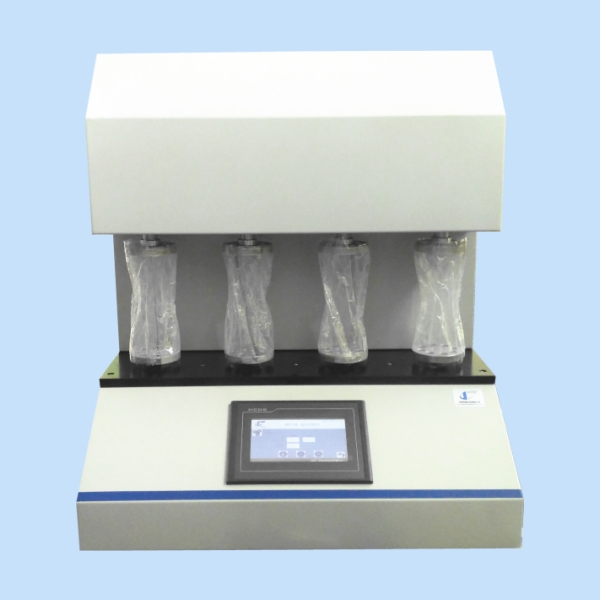
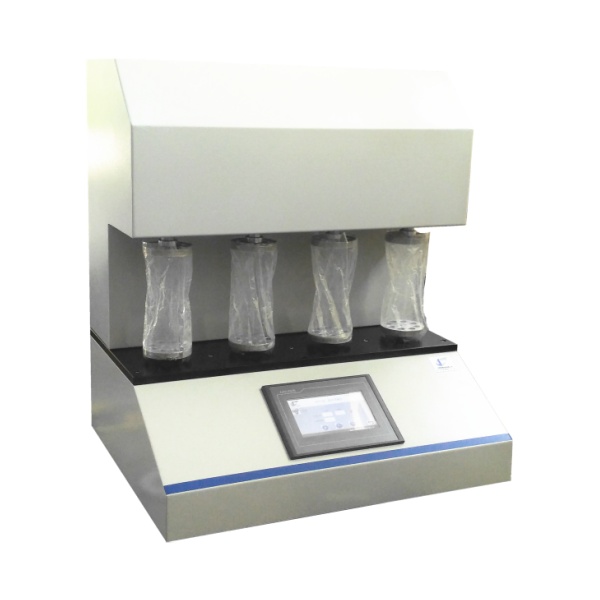
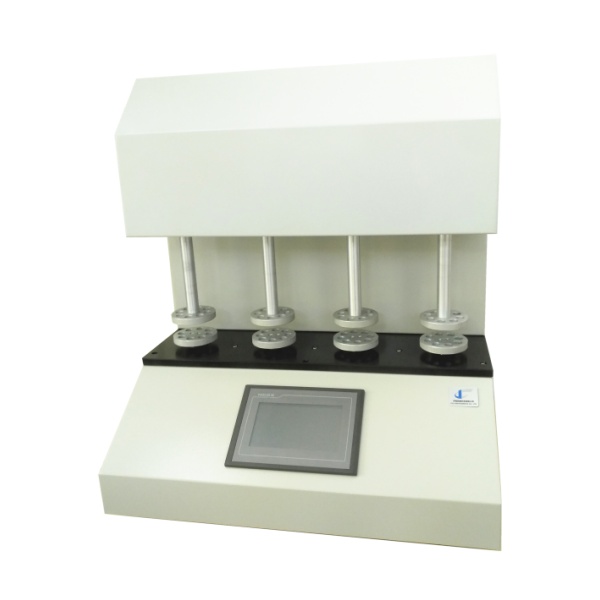
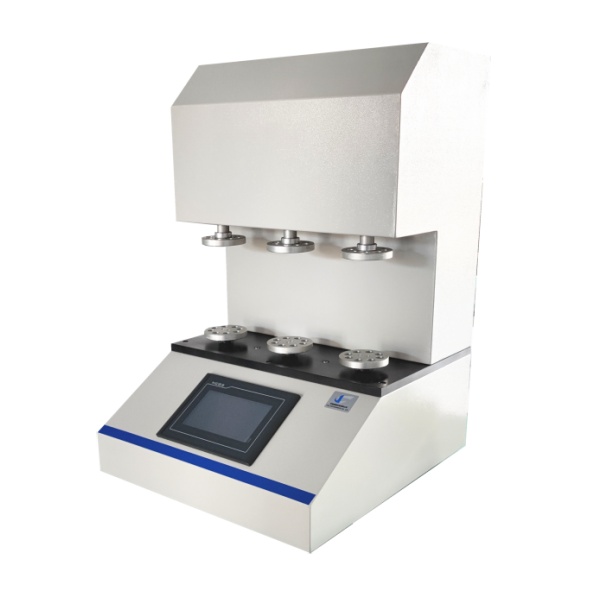
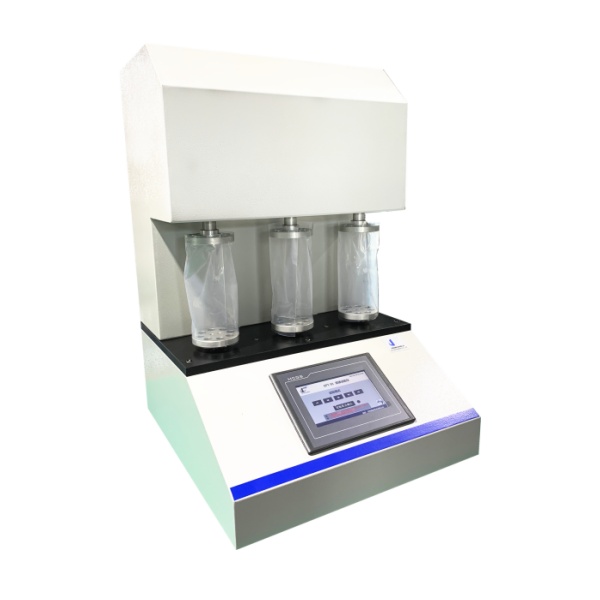
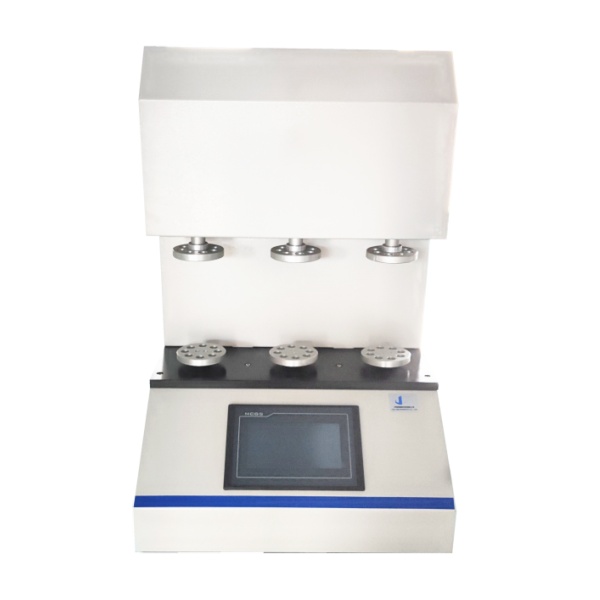
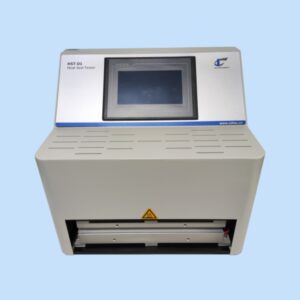
Comprobador de flexión GFT Gelbo
- Estándar: ASTM F392
- Fabricante:Instrumentos celulares
- Aplicaciones:Materiales de embalaje, materiales para dispositivos médicos, pruebas farmacéuticas, adhesivos, textiles, envases de papel y cartón, y más.
- Personalización:Disponible para requisitos de pruebas especiales y transformaciones de automatización.
Introduction of Gelbo Flex Tester
El Comprobador de flexión Gelbo is a specialized instrument designed to evaluate the resistencia a la flexión and mechanical integrity of flexible materials such as barrier films, laminates, and coated fabrics. By simulating real-world twisting and compressive deformation, this tester provides critical insights into the resistance of packaging and coated materials to formación de agujeros de alfiler, cracking, y barrier property degradation. Standards such as ASTM F392 y ISO 7854 define the testing methods that ensure accuracy, repeatability, and international comparability.
El Comprobador de flexión Gelbo, sometimes referred to as a rumple flex tester o flex tester, operates by subjecting test specimens to simultaneous twisting and compressing motions. This combined action reproduces the mechanical stress flexible packaging materials experience during filling, sealing, transportation, and storage.
The test method, commonly known as the Método de ensayo Gelbo, evaluates a material’s ability to maintain integrity under cyclic deformation. Materials that fail this test often develop microscopic pinholes or cracks that compromise the package’s barrier performance against oxygen, moisture, or gas transmission.
Principle of the Gelbo Flex and Related Standards
Two primary international standards govern flex durability evaluation: ASTM F392 y ISO 7854.
ASTM F392, titled Práctica estándar para acondicionar materiales de barrera flexibles para lograr durabilidad frente a la flexión, specifies test conditions for assessing the resistance of flexible packaging materials to flex-induced pinholes and barrier failures. In this method, specimens undergo repeated flexing at 45 ciclos por minuto, involving a 440° twist combined with a 65 mm horizontal motion. The test is conducted under standard conditions of 23 ± 2°C y 50 ± 5% relative humidity. Depending on the desired conditioning level, test cycles may range from 20 a 2700, corresponding to levels A through E.
ISO 7854, Rubber- or plastics-coated fabrics — Determination of resistance to damage by flexing, defines three methods of flex testing. Method C, known as the crumple/flex method, closely resembles the Gelbo principle. Here, a cylindrical specimen is subjected to oscillating twist and axial compression, simulating real-life flex stress for coated fabrics, medical materials, and technical textiles.
Together, these standards establish the Gelbo flex procedure as the global benchmark for pruebas de resistencia a la flexión.
How the Gelbo Flex Tester Works
El Comprobador de flexión Gelbo (for example, the GFT Flex Durability Tester por Instrumentos celulares) operates with high precision to replicate ASTM and ISO flexing motions.
- Preparación de la muestra: Standard samples are 200 × 280 mm, cut in both machine and transverse directions.
- Mounting: Samples are clamped or adhered to the tester’s mandrels, forming a cylindrical shape for simultaneous twisting and compression.
- Flexing Cycle: The tester executes a 440° twist during the first 90 mm of stroke, followed by a 65 mm linear compression, at a consistent 45 ciclos por minuto.
- Mode Selection: Users can select from five programmable test modes (A–E) to suit different material types or test objectives.
- Result Evaluation: After conditioning, specimens are inspected for pinholes, cracks, or barrier degradation using OTR (Oxygen Transmission Rate), WVTR (Water Vapor Transmission Rate)o GTR tests.
This controlled process allows laboratories and quality control teams to quantify a material’s resistencia a la flexión and predict its performance under real-world mechanical stress.
Key Features and Main Parameter
El Comprobador de flexión GFT Gelbo series from Instrumentos celulares offers advanced technology designed for high precision and ease of use:
- PLC Control & Touchscreen Interface – Ensures accurate motion control, user-friendly operation, and data repeatability.
- Multiple Test Stations – Available with three or four stations for parallel testing and comparative analysis.
- Programmable Test Conditions – Supports ASTM F392 modes A–E for versatile testing from quick screening (20 cycles) to endurance evaluation (2700 cycles).
- Durable Mechanical Design – Engineered for long-term stability and compliance with ASTM F392 y ISO 7854 normas.
- Enhanced Data Reliability – Supports post-test evaluation of barrier integrity, pinhole formation, and mechanical strength changes.
| GFT Gelbo Flex Durability Tester | ||
| Parámetro | GFT-02 Model | GFT-01 Model |
| Ángulo flexible | 440° (90 mm) o 400° (80 mm) | |
| Capacidad | 3.5 N.m | 2,5 Nm |
| Trazo horizontal | 155 mm o 80 mm | |
| Estaciones | 3 | 4 |
| Tamaño de la muestra | 280 mm x 200 mm | |
| Fuerza | 110 ~ 220 V | |
Applications of Gelbo Flex Testing
Gelbo flex testing is essential in industries where flexible materials must retain barrier integrity and aesthetic quality after repeated handling or mechanical stress. Key application areas include:
- Flexible Packaging for food, pharmaceuticals, and medical devices
- Coated Fabrics and Films for industrial, textile, and outdoor uses
- Adhesive Laminates y composite structures
- Control de calidad in R&D laboratories y certification agencies
By identifying weak points early, manufacturers can improve material formulation, coating technology, and lamination processes.
Preguntas frecuentes
A: El comprobador de flexibilidad Gelbo de Cell Instruments cuenta con una combinación única de ingeniería de precisión y características de diseño innovadoras. Desde su interfaz de usuario intuitiva hasta sus capacidades de automatización avanzadas, cada aspecto está diseñado meticulosamente para optimizar el rendimiento y la experiencia del usuario. Además, su compatibilidad con una amplia gama de materiales e industrias lo distingue como una solución versátil para las necesidades de pruebas de flexibilidad.
R: Al someter los materiales a rigurosas pruebas de flexión, el comprobador de durabilidad por flexión ayuda a identificar debilidades y posibles puntos de falla en las primeras etapas del proceso de desarrollo. Este enfoque proactivo permite a los fabricantes abordar los problemas antes de que se agraven, lo que da como resultado productos más resistentes, confiables y, en última instancia, de mayor calidad.
R: ¡Por supuesto! El comprobador Gelbo Flex está diseñado para adaptarse a una amplia gama de tamaños y formas de muestras, lo que ofrece flexibilidad y versatilidad en las pruebas. Ya sea que trabaje con películas pequeñas y delicadas o con materiales más grandes y voluminosos, nuestro comprobador puede adaptarse para cumplir con sus requisitos de prueba específicos con facilidad.
R: La precisión es primordial en el comprobador de durabilidad por flexión. Mediante una calibración meticulosa y una construcción robusta, garantizamos que cada prueba produzca resultados consistentes y confiables. Además, nuestro comprobador está diseñado para minimizar los factores externos que podrían influir en los resultados de las pruebas, lo que mejora aún más la precisión y la repetibilidad.
R: En Cell Instruments, priorizamos la satisfacción y el soporte del cliente. Nuestro equipo de soporte técnico dedicado está disponible para ayudar a los usuarios con cualquier pregunta, inquietud o desafío técnico que puedan tener. Ya sea que necesite ayuda con la configuración, la calibración o la resolución de problemas, nuestros expertos están aquí para brindarle un soporte rápido y eficaz para garantizar que sus procesos de prueba se desarrollen sin problemas.
Referencia
ASTM F392 Práctica estándar para acondicionar materiales de barrera flexibles para lograr durabilidad frente a la flexión
 ES
ES  EN
EN  DE
DE  FR
FR  IT
IT  AR
AR  KO
KO  JA
JA  RU
RU  PT
PT  VI
VI  ID
ID  BG
BG  CS
CS  DA
DA  EL
EL  ET
ET  FI
FI  HE
HE  HU
HU  LT
LT  LV
LV  NL
NL  PL
PL  RO
RO  SK
SK  SV
SV  SL
SL  UK
UK  TR
TR