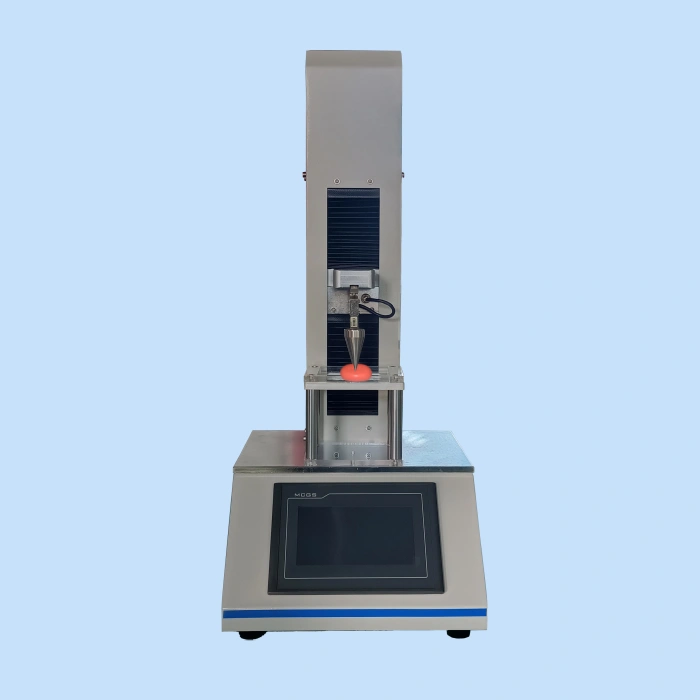
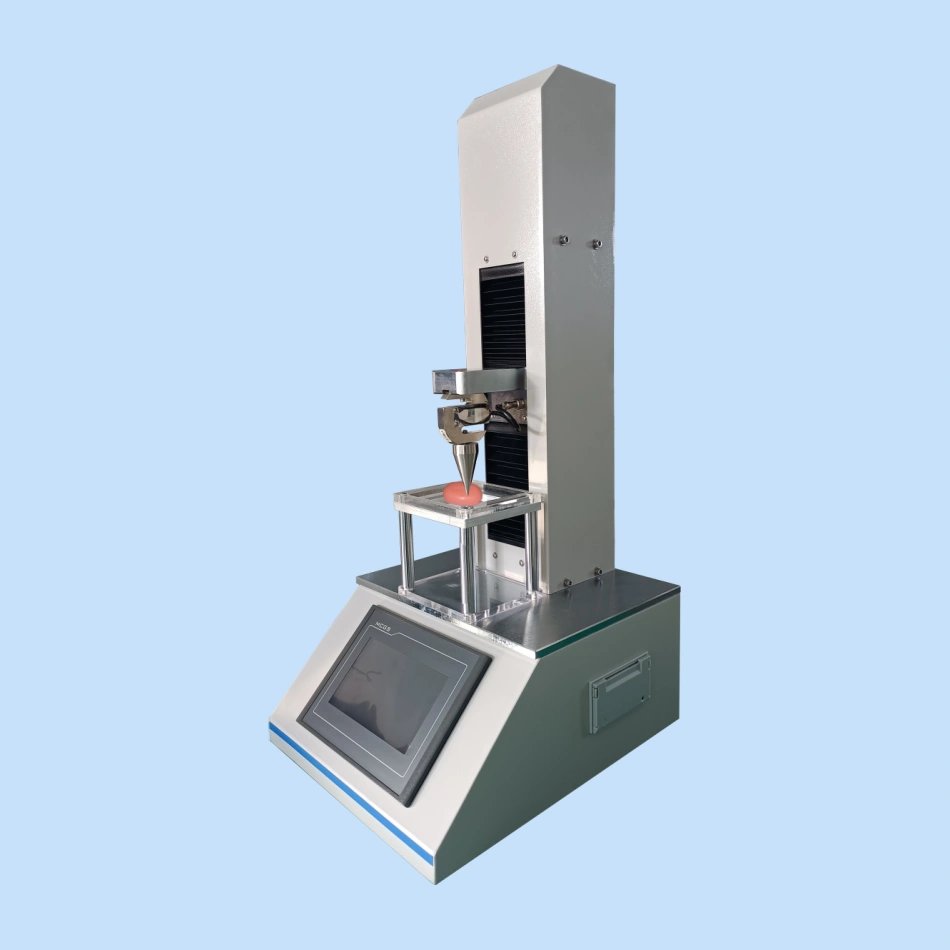
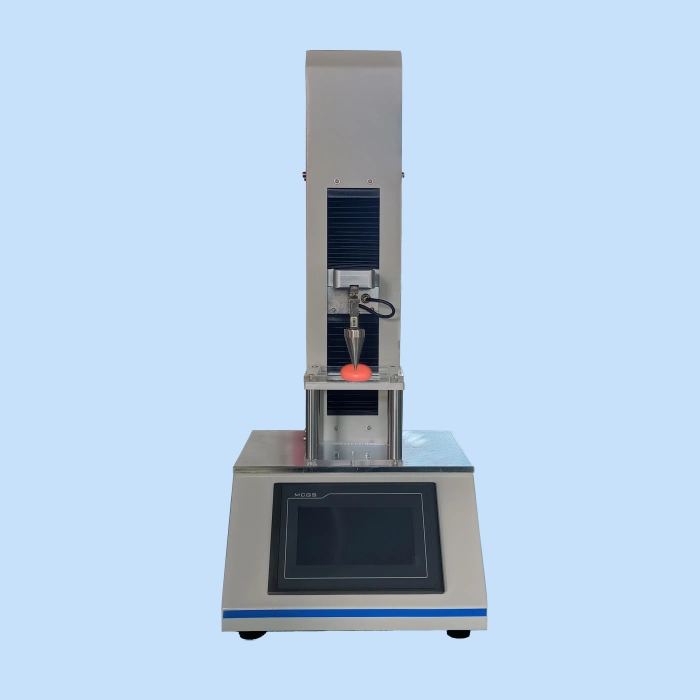
SPT-01 muilo skverbties testeris

  • Standartinis: ASTM D1321
  • Gamintojas: ląstelių instrumentai
  • Programos:Daily chemicals and more.
  • Tinkinimas: Galima atlikti specialiems testavimo reikalavimams ir automatizavimo transformacijoms

A soap penetration tester plays a critical role in modern soap quality control. From personal care brands to industrial soap manufacturers, controlling hardness ensures consistent performance, durability, and user experience. As a company deeply involved in texture analysis and material testing, Cell Instruments provides advanced solutions that help laboratories and production teams translate tactile properties into reliable data.

This article offers a complete and practical introduction to the soap penetration tester, explaining how it works, why it matters, and how it aligns with recognized standards such as ASTM D1321.

ASTM D1321 and the Soap Hardness Test Framework

The ASTM D1321 standard establishes a recognized soap hardness test method based on penetration measurement. This approach determines how far a standardized penetrator enters the soap surface under controlled conditions of load and time.

Using a soap penetration tester in accordance with ASTM D1321 allows manufacturers to perform a consistent evaluation of soap hardness, eliminating subjective judgment and reducing variability between operators or testing locations. The resulting penetration value directly reflects the firmness and structural integrity of the soap.

This standardized framework makes penetration testing suitable for routine inspection, formulation comparison, and quality documentation.

Why Soap Penetration Testing Matters in Quality Control

Soap hardness directly influences product performance, appearance, and user experience. Excessively soft soap may deform or dissolve rapidly, while overly hard soap can crack or feel uncomfortable during use. A soap penetration tester provides a practical solution by delivering quantitative data that supports process control.

Key benefits include:

  • Objective comparison between production batches
  • Early detection of formulation or moisture changes
  • Verification of curing and aging effects
  • Support for internal specifications and customer requirements

By integrating penetration testing into daily quality control, manufacturers gain greater confidence in product consistency.

How the Soap Penetration Tester Works

The soap penetration tester applies a controlled vertical force to a soap sample using a standardized penetrator. During the test, the instrument records penetration depth or resistance with high precision.

A typical test workflow includes:

  • Positioning the soap sample on a stable test platform
  • Selecting the appropriate test speed and penetration parameters
  • Initiating the test sequence through a clear user interface
  • Automatically recording and displaying penetration results

Because the test conditions remain consistent, results show excellent repeatability and are suitable for trend analysis and reporting.

Interpreting Penetration Results for Soap Hardness Control

Penetration values serve as a direct indicator of soap hardness. Lower penetration depth corresponds to higher hardness, while greater penetration reflects softer material behavior.

Manufacturers use penetration data to:

  • Compare different soap formulations

  • Monitor production stability over time

  • Optimize raw material ratios and processing conditions

  • Correlate mechanical hardness with consumer feedback

When aligned with ASTM D1321 guidance, penetration results become a reliable reference for both quality assurance and product development.

Application Range of Soap Penetration Testing

A soap penetration tester supports testing of:

  • Toilet and personal care bar soaps
  • Glycerin and transparent soaps
  • Medicinal and specialty soaps
  • Industrial and institutional soap products

Beyond soap, penetration-based texture testing also applies to waxes, creams, and other semi-solid materials, increasing the long-term value of the instrument.

Design Features That Ensure Accurate and Repeatable Testing

Modern soap penetration testers focus on precision, stability, and ease of use. Key design considerations include accurate displacement measurement, smooth motion control, and flexible test parameter settings.

Ląstelių instrumentai SPT-01 integrates these principles into its soap penetration testing solutions, drawing on extensive experience in texture analysis, packaging materials, and pharmaceutical testing. The result is a reliable testing platform suitable for both routine quality checks and advanced laboratory studies.

Bandymų diapazonas 500N(or others)
Greitis 1-500 mm/m (or as required)
Rezoliucija0.5% FS
Stroke(jig excluded)250mm
Dimension(mm, LWH)410*360*820
GaliaAC 110~ 220V

A soap penetration tester provides an efficient and standardized approach to measuring soap hardness. By supporting ASTM D1321 test principles, it enables accurate evaluation of soap hardness while improving quality control confidence.

For manufacturers and laboratories seeking dependable, repeatable, and easy-to-use testing equipment, Cell Instruments offers soap penetration testing solutions that combine technical reliability with practical usability—making them well suited for modern soap production and research environments.
DUK

It measures soap hardness by recording how deeply a penetrator enters the soap under controlled conditions.

ASTM D1321 defines a standardized penetration method for evaluating and comparing soap hardness.

It provides objective, repeatable data and reduces operator subjectivity.

Bar soaps, transparent soaps, medicated soaps, and industrial cleaning soaps.

lt_LTLT
Slinkite į viršų

GAUTI nemokamą pasiūlymą ir metodą?

Užpildykite žemiau esančią formą ir mes netrukus susisieksime.