

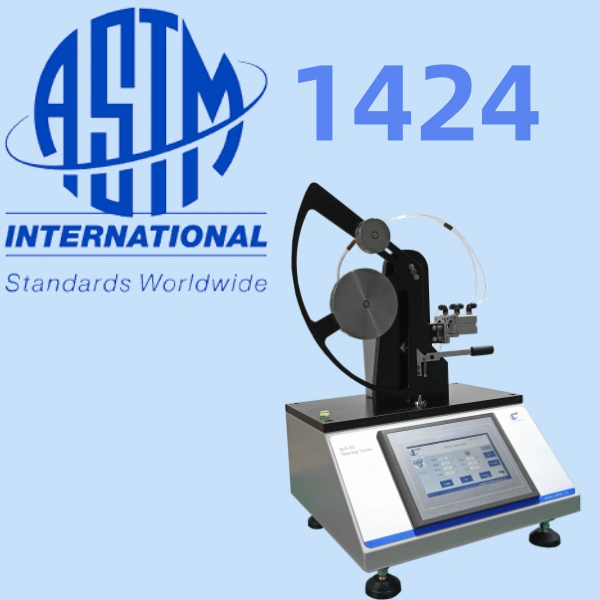
ASTM D1424
Measuring Elmendorf Tear Resistance in Fabrics
ASTM D1424 is a widely recognized standard for evaluating the tear resistance of fabrics using the Elmendorf-type falling pendulum apparatus. This test is essential for determining how well a fabric can withstand tears when subjected to stress. It is commonly used in the textile industry to assess fabric durability and is particularly important in commercial shipments where fabric strength is a key factor in quality control.
Get QuoteElmendorf Tear Resistance: Understanding the Test Procedure
Elmendorf tear resistance is measured using a specific test method that applies a controlled force to a fabric sample to determine how much force is needed to propagate a tear. ASTM D1424 provides a detailed procedure for testing fabrics under controlled conditions, ensuring that the results are both reliable and consistent. The test measures the force required to propagate a tear in a fabric specimen, and the results help evaluate its performance under real-world conditions.
What is Fabric Tear Strength?
Fabric tear strength refers to a fabric’s resistance to tearing under stress. In ASTM D1424, a slit is made in the fabric, and a falling pendulum apparatus is used to apply force to propagate the tear. The force required to continue the tear is recorded, providing a measure of the fabric’s tear resistance. This is important for materials used in demanding applications, such as safety gear, upholstery, and industrial fabrics.
Test Method: Falling Pendulum Procedure
The ASTM D1424 test method follows a standardized procedure to measure fabric tear strength:
Specimen Preparation: A fabric specimen is cut and held between two clamps. The specimen is pre-cut to initiate a tear, and the fabric is subjected to a controlled force.
Force Application: The Elmendorf-type pendulum apparatus is used to apply force to the fabric. The resistance to tearing is measured based on the scale reading of the instrument, which is also influenced by the pendulum’s capacity.
Data Collection: The force required to propagate the tear is recorded and used to calculate the fabric’s tear strength. This measurement is essential for understanding how well the fabric will perform under tension and stress.
Significance of Elmendorf Tear Resistance Testing
Testing fabric tear strength using ASTM D1424 is important for several reasons:
Durability: Fabrics used in a variety of applications must be able to withstand wear and tear. This test helps ensure the material is durable enough for its intended use.
Quality Control: Manufacturers use ASTM D1424 to monitor the quality of their fabrics and ensure they meet the required strength standards. It helps maintain consistency in fabric performance.
Industry Standards: Many industries require fabrics to meet specific standards for tear resistance, especially in products like airbags, protective clothing, and industrial fabrics. ASTM D1424 helps ensure that fabrics meet these standards.
Applications of ASTM D1424
The ASTM D1424 test is widely used in various industries where fabric strength is critical. Some common applications include:
Textile Manufacturing: To ensure the durability of fabrics used in clothing, upholstery, and other textile products.
Safety Equipment: For fabrics used in products such as airbags, work uniforms, and protective gear.
Industrial Fabrics: In fabrics used for heavy-duty applications such as tarps, tents, and industrial filters.
Cell Instruments: Precision Testing for Fabric Strength
At Cell Instruments, we offer tensile testing machines designed to meet the requirements of ASTM D1424. Our falling pendulum apparatus provides precise measurements of Elmendorf tear resistance, ensuring that your fabrics meet the necessary durability standards. Our advanced data collection systems help manufacturers maintain high-quality testing processes and ensure the accuracy and reliability of their results.
Conclusion
ASTM D1424 is a crucial standard for measuring fabric tear strength using the Elmendorf-type pendulum apparatus. By understanding and applying this test, manufacturers can ensure their fabrics are durable and suitable for a variety of applications. Whether in the textile, safety, or industrial sectors, this test is vital for ensuring fabric performance under stress. Cell Instruments provides the equipment and solutions needed to conduct precise and reliable testing, helping manufacturers achieve consistent product quality and meet industry standards.
FAQs
Q1: What is ASTM D1424 and why is it important?A1: ASTM D1424 is the standard test method for measuring the tear resistance of fabric using the Elmendorf-type falling pendulum apparatus. It is crucial for assessing the durability of fabrics and ensuring they meet the necessary performance standards. This test is widely used in industries such as textiles, safety gear, and industrial fabrics to evaluate fabric strength under stress.
Q2: How does the Elmendorf tear resistance test work?A2: The Elmendorf tear resistance test, as described in ASTM D1424, involves applying force to a fabric specimen that has been pre-cut with a slit. The specimen is held between two clamps, and a falling pendulum apparatus applies a controlled force to propagate the tear. The force required to continue the tear is measured, and this data helps determine the fabric’s tear resistance.
Q3: What types of fabrics can be tested using ASTM D1424?A3: ASTM D1424 applies to a wide range of fabrics, including woven fabrics, layered blankets, airbag fabrics, napped fabrics, and resin-treated fabrics. The test method is particularly suited for fabrics that tear in the direction of force application and is commonly used for testing fabrics in their warp direction.
Q4: Why is fabric tear strength important in industrial applications?A4: Fabric tear strength is critical for ensuring that textiles can withstand the stresses they will face in real-world applications. For instance, in safety gear like airbags or protective clothing, fabrics must resist tearing under high stress to maintain their integrity. Testing tear resistance using ASTM D1424 ensures that materials are durable enough for demanding environments.
Q5: How does ASTM D1424 help manufacturers ensure fabric quality?A5: ASTM D1424 provides a standardized method for testing fabric tear strength, ensuring that fabrics meet required durability standards. Manufacturers can use this test to maintain consistency in fabric performance across production batches. It also helps identify weak points in materials, allowing for corrective actions before commercial shipments.
Q6: What equipment is required for ASTM D1424 testing?A6: ASTM D1424 testing requires a falling pendulum (Elmendorf-type) apparatus. This machine applies a controlled force to a fabric specimen to propagate a tear. The force required to continue the tear is recorded by the instrument, providing a measure of the fabric’s tear strength. Additional systems for data collection and analysis may also be used to enhance testing accuracy.
 EN
EN  ES
ES  DE
DE  FR
FR  IT
IT  AR
AR  KO
KO  JA
JA  RU
RU  PT
PT  VI
VI  ID
ID  BG
BG  CS
CS  DA
DA  EL
EL  ET
ET  FI
FI  HE
HE  HU
HU  LT
LT  LV
LV  NL
NL  PL
PL  RO
RO  SK
SK  SV
SV  SL
SL  UK
UK  TR
TR