

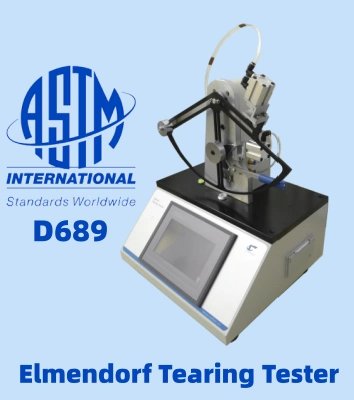
ASTM D689
Elmendorf Paper Tear Strength Test
ASTM D689 is a widely adopted standard for evaluating the tear resistance of paper materials using an Elmendorf-type tearing tester. In paper manufacturing, packaging, printing, and converting industries, tear performance directly affects runnability, durability, and end-use reliability. By following ASTM D689, laboratories can generate consistent, comparable data that reflects the tear strength of paper under controlled conditions.
This article explains the purpose, principles, and testing process defined in ASTM D689, helping quality control personnel and engineers correctly perform the paper tear strength test and interpret results with confidence.
Understanding ASTM D689
ASTM D689 defines a standardized method to measure the force required to tear paper in a direction perpendicular to the sheet plane after a tear has been initiated. The test relies on an Elmendorf pendulum mechanism, which converts potential energy loss into a measurable tearing force.
Unlike tensile or burst tests, ASTM D689 focuses on internal tearing resistance. This property reflects how paper behaves when subjected to sudden forces during converting, folding, cutting, or handling. For this reason, ASTM D689 often complements other strength tests to provide a more complete performance profile.
The standard applies to many grades of paper and paperboard, although it does not suit highly directional papers when cross-directional tearing must be evaluated.
ASTM D689: Paper Tear Strength Test with an Elmendorf Tearing Tester
The paper tear strength test described in ASTM D689 uses an Elmendorf tearing tester to tear one or more plies of paper through a fixed distance. The instrument measures the work done by the pendulum during tearing and displays the average tearing force.
When multiple sheets are tested together, the result represents an average value. This value allows laboratories to calculate the approximate tearing resistance of a single sheet. For thin papers where single-sheet testing is possible, the tearing resistance can be measured directly.
The tear strength of paper obtained through ASTM D689 serves as a key indicator of fiber bonding, fiber length, refining conditions, and overall sheet integrity.
Test Principle Based on the Elmendorf Method
The Elmendorf method operates on a simple but reliable mechanical principle. A pendulum with known mass and geometry is released from a fixed height. As it swings, it tears the test specimen clamped in the tester. The energy consumed during tearing reduces the pendulum’s final height.
The instrument scale converts this energy loss into tearing force. Because the tearing distance remains constant, ASTM D689 ensures that results remain comparable between laboratories when procedures and equipment remain consistent.
This principle makes the Elmendorf method fast, repeatable, and suitable for routine quality control testing in paper mills and testing labs.
Test Procedure Overview According to ASTM D689
To achieve accurate and repeatable results, laboratories should follow a structured procedure aligned with ASTM D689:
Specimen preparation
Prepare paper specimens in the required size and orientation. Tests are typically conducted in both machine direction and cross direction.
Ply selection
Select an appropriate number of plies so that readings fall within the calibrated range of the Elmendorf tearing tester.
Instrument setup
Verify calibration, ensure the pendulum moves freely, and confirm that no friction or obstruction affects motion.
Tear initiation and testing
Clamp the specimen securely and release the pendulum to tear the paper through the specified distance.
Result recording
Record individual readings and calculate average, maximum, and minimum values for each test direction.
Careful control of ply count and specimen alignment plays a critical role in minimizing variability.
Applications of ASTM D689 in the Paper Industry
ASTM D689 remains widely used as a predictor of end-use performance across many paper grades. Packaging papers rely on adequate tear resistance to prevent failure during filling and transport. Printing papers benefit from balanced tear strength to avoid edge damage during high-speed processing.
By monitoring tear strength of paper, manufacturers can adjust raw materials, refining levels, and process parameters to achieve consistent quality.
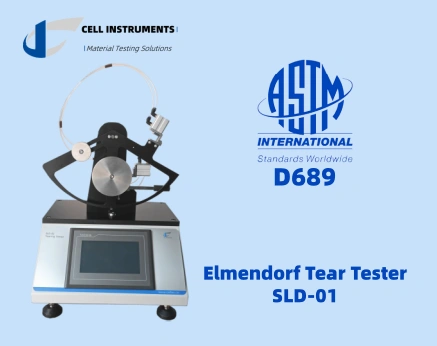
Reliable results depend on stable and precise instrumentation. A modern Elmendorf tearing tester, such as the Cell Instruments Tear Tester SLD-01, provides accurate energy measurement, smooth pendulum motion, and clear digital or analog readouts. These features help laboratories meet ASTM D689 requirements while improving efficiency and repeatability.
Cell Instruments Co., Ltd. supports paper testing laboratories with professional-grade tear testers and technical expertise, ensuring compliance with international standards and long-term testing reliability.
Conclusion
ASTM D689 offers a proven and practical method for evaluating paper tear resistance using the Elmendorf approach. By understanding the test principle, following the correct procedure, and selecting appropriate equipment, laboratories can generate dependable data that supports quality control and product development. For paper manufacturers and users alike, ASTM D689 remains an essential standard for assessing real-world performance..
For dependable testing solutions that meet ASTM and international standards, Cell Instruments provides professional-grade systems and expert technical support tailored to your testing needs.
FAQs
What is ASTM D689 and why is it important?ASTM D689 is a standard test method used to measure the tear strength of paper using an Elmendorf tearing tester. It provides critical data for quality control and predicts the performance of paper in end-use applications.
Which materials can be tested using ASTM D689?This test applies to most paper grades, including office paper, packaging paper, and specialty papers. It measures both machine-direction and cross-direction paper tear strength to ensure accurate evaluation of material durability.
How does the Elmendorf tearing tester work in this test?
The Elmendorf tearing tester uses a pendulum to tear the paper specimen. The energy absorbed by the paper as it tears is recorded, which is then converted to a tear strength of paper value for a single sheet or multiple plies.
What are the key steps in performing an ASTM D689 paper tear strength test?The procedure includes specimen preparation, clamping the paper in the Elmendorf tester, initiating the tear, recording the tearing force, and calculating the average tear strength. Tests are performed in both the machine and cross directions for comprehensive results.
 EN
EN  ES
ES  DE
DE  FR
FR  IT
IT  AR
AR  KO
KO  JA
JA  RU
RU  PT
PT  VI
VI  ID
ID  BG
BG  CS
CS  DA
DA  EL
EL  ET
ET  FI
FI  HE
HE  HU
HU  LT
LT  LV
LV  NL
NL  PL
PL  RO
RO  SK
SK  SV
SV  SL
SL  UK
UK  TR
TR