
วิธีการทดสอบแรงบิดตามมาตรฐาน ASTM D2063 บนฝาขวด: คู่มือแบบขั้นตอนต่อขั้นตอน
บทนำ
ขีดจำกัด เครื่องทดสอบแรงบิดเป็นเครื่องมือที่สำคัญอย่างยิ่งในอุตสาหกรรมบรรจุภัณฑ์ ซึ่งช่วยให้แน่ใจว่าภาชนะถูกปิดผนึกอย่างถูกต้องเพื่อรักษาความสมบูรณ์ของผลิตภัณฑ์ การทดสอบแรงบิดตามมาตรฐาน ASTM D2063 เป็นวิธีการมาตรฐานสำหรับการวัดการคงแรงบิดในบรรจุภัณฑ์ที่มีการปิดด้วยเกลียวต่อเนื่อง บทความนี้จะกล่าวถึงความสำคัญของ ASTM D2063 ขั้นตอนที่เกี่ยวข้อง และวิธีการที่ช่วยในการรักษาคุณภาพและการปฏิบัติตามมาตรฐานในอุตสาหกรรมต่างๆ.
ความสำคัญของ ASTM D2063 ในการทดสอบแรงบิดฝาปิด
มาตรฐาน ASTM D2063 กำหนดวิธีการทดสอบสำหรับการวัดแรงบิดที่จำเป็นในการใส่และถอดฝาขวดและภาชนะอื่นๆ มาตรฐานนี้ช่วยให้แน่ใจว่าฝาปิดแน่นพอดี ไม่แน่นหรือหลวมเกินไป ซึ่งจะช่วยป้องกันการรั่วไหลและการปนเปื้อน พร้อมทั้งอำนวยความสะดวกในการใช้งานสำหรับผู้บริโภค.
ประโยชน์หลักของการใช้เครื่องทดสอบแรงบิดฝาปิด
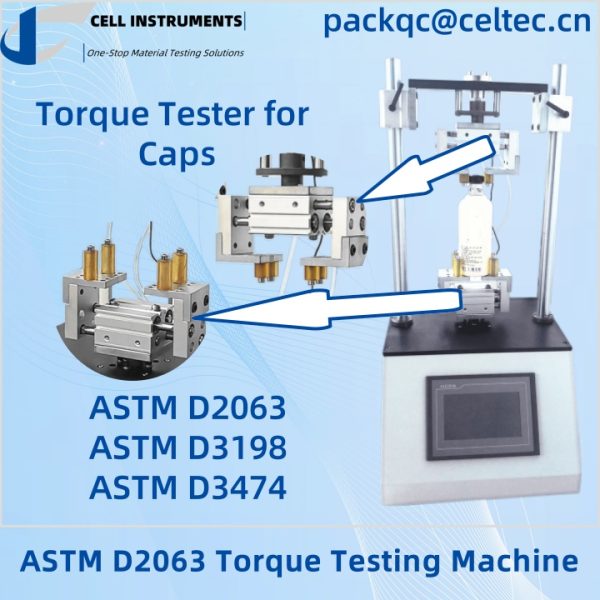
- การประกันคุณภาพ: ตรวจสอบให้แน่ใจว่าผลิตภัณฑ์เป็นไปตามมาตรฐานคุณภาพ ป้องกันการร้องเรียนจากลูกค้า.
- ความปลอดภัย: ป้องกันฝาปิดที่ขันไม่แน่นพอซึ่งอาจทำให้เกิดการรั่วไหลและการปนเปื้อน และฝาปิดที่ขันแน่นเกินไปซึ่งเปิดออกได้ยาก.
- การปฏิบัติตามข้อกำหนด: เป็นไปตามมาตรฐานอุตสาหกรรม เช่น ASTM D2063, ASTM D3198 และ ASTM D3474.
- ประสิทธิภาพ: ทำให้กระบวนการทดสอบเป็นอัตโนมัติ ช่วยประหยัดเวลาและลดข้อผิดพลาดของมนุษย์.
คุณสมบัติของเครื่องทดสอบแรงบิดฝาปิด
เครื่องทดสอบแรงบิดฝาครอบสมัยใหม่ เช่นที่นำเสนอโดย Cell Instruments มาพร้อมกับคุณสมบัติขั้นสูงเพื่อเพิ่มความแม่นยำและความสะดวกในการใช้งาน:
- หน่วยควบคุมด้วย PLC: ให้ความเสถียรในระดับอุตสาหกรรมพร้อมหน้าจอสัมผัส HMI ที่ใช้งานง่าย.
- ความสามารถในการจับและหมุนอัตโนมัติ: จำลองสภาพแวดล้อมสายการผลิต.
- การวัดแรงล็อคและแรงเปิด: ให้ข้อมูลที่ครอบคลุมเกี่ยวกับประสิทธิภาพของฝา.
- การเก็บรักษาค่าสูงสุดอัตโนมัติ: จับค่าแรงบิดสูงสุด.
- หน่วยวัดหลายหน่วย: แสดงผลลัพธ์ในหน่วยต่าง ๆ เพื่อความหลากหลาย.
วิธีการทดสอบตามมาตรฐาน ASTM D2063
- การเตรียมตัวอย่าง: ตรวจสอบให้แน่ใจว่าฝาและภาชนะสะอาดและไม่เสียหาย.
- การตั้งค่าเครื่องทดสอบ: ปรับการตั้งค่าตามข้อกำหนดของการทดสอบ.
- การดำเนินการทดสอบ: ใช้ฟังก์ชันการจับยึดและหมุนอัตโนมัติ.
- การแปลผล: วิเคราะห์การวัดแรงบิดเพื่อกำหนดการปฏิบัติตามมาตรฐาน.
ประเภทของการทดสอบแรงบิด
- การทดสอบแรงบิดของแอปพลิเคชัน: วัดแรงที่จำเป็นในการปิดฝา.
- การทดสอบแรงบิดถอด: วัดแรงที่จำเป็นในการถอดฝาออก.
- รอบการทดสอบแรงบิดในการติดตั้ง/ถอด: ทดสอบฝาผ่านการเปิดและปิดหลายรอบ.
มาตรฐาน ASTM ที่เกี่ยวข้อง
- ASTM D2063: เน้นการรักษาแรงบิดสำหรับบรรจุภัณฑ์ที่มีเกลียวต่อเนื่อง.
- ASTM D3198: ระบุค่าแรงบิดในการขันและคลายของฝาปิดแบบเกลียวหรือแบบขั้วต่อ.
- ASTM D3474: ให้แนวทางสำหรับการสอบเทียบและการใช้เครื่องวัดแรงบิด.
การประยุกต์ใช้เครื่องทดสอบแรงบิดสูงสุดของฝาปิด
- บรรจุภัณฑ์: ตรวจสอบให้มีการปิดผนึกอย่างถูกต้องเพื่อป้องกันการรั่วไหลและการปนเปื้อน.
- อาหารและเครื่องดื่ม: รักษาความสดใหม่และความปลอดภัยของผลิตภัณฑ์.
- ยา: รับประกันความสมบูรณ์และความปลอดภัยของผลิตภัณฑ์ยา.
- เครื่องสำอางและสารเคมีในครัวเรือน: ป้องกันการหกและรักษาคุณภาพของผลิตภัณฑ์.
ตัวเลือกการปรับแต่ง
Cell Instruments ให้บริการปรับแต่งเพื่อตอบสนองความต้องการในการทดสอบที่เฉพาะเจาะจง:
- การปรับช่วงแรงบิด: ปรับเครื่องทดสอบให้เหมาะสมกับการใช้งานเฉพาะ.
- การปรับขนาดตัวอย่าง: ปรับเปลี่ยนเครื่องทดสอบสำหรับขนาดฝาต่างๆ.
- การผสานรวมซอฟต์แวร์: เพิ่มประสิทธิภาพการวิเคราะห์ข้อมูลและการรายงาน.
สรุป
การทดสอบแรงบิดตามมาตรฐาน ASTM D2063 มีความสำคัญอย่างยิ่งต่อการรับประกันคุณภาพและความปลอดภัยของผลิตภัณฑ์ในหลากหลายอุตสาหกรรม การปฏิบัติตามมาตรฐานนี้ช่วยให้ผู้ผลิตสามารถรักษาการปฏิบัติตามข้อกำหนด เพิ่มความสมบูรณ์ของผลิตภัณฑ์ และสร้างความพึงพอใจให้กับผู้บริโภค Cell Instruments’ cap torque testers มอบโซลูชันที่เชื่อถือได้และมีประสิทธิภาพสำหรับทุกความต้องการในการทดสอบแรงบิดของคุณ.
คำถามที่พบบ่อย
1. การทดสอบแรงบิด ASTM D2063 คืออะไร?
การทดสอบแรงบิดตามมาตรฐาน ASTM D2063 วัดการคงแรงบิดของบรรจุภัณฑ์ที่มีฝาปิดเกลียวต่อเนื่อง เพื่อให้มั่นใจถึงการปิดผนึกที่เหมาะสมและความสะดวกในการใช้งาน.
2. ทำไมการทดสอบแรงบิดสูงสุดจึงมีความสำคัญ?
การทดสอบแรงบิดฝาปิดมีความสำคัญอย่างยิ่งในการรับรองว่าภาชนะบรรจุถูกปิดผนึกอย่างถูกต้อง ป้องกันการรั่วไหลและการปนเปื้อน รวมถึงความปลอดภัยและความสะดวกสบายของผู้บริโภค.
3. เครื่องทดสอบแรงบิดฝาอัตโนมัติทำงานอย่างไร?
เครื่องทดสอบแรงบิดฝาอัตโนมัติใช้ฟังก์ชันการจับยึดและหมุนอัตโนมัติเพื่อวัดแรงบิดที่จำเป็นในการติดตั้งและถอดฝา ให้ผลลัพธ์ที่แม่นยำและสม่ำเสมอ.
4. อุตสาหกรรมใดที่ได้รับประโยชน์จากเครื่องทดสอบแรงบิดสูงสุด?
อุตสาหกรรมเช่นบรรจุภัณฑ์, อาหารและเครื่องดื่ม, ยา, เครื่องสำอาง, และสารเคมีในครัวเรือนได้รับประโยชน์จากเครื่องทดสอบแรงบิดสูงสุดโดยการรับประกันคุณภาพและความปลอดภัยของผลิตภัณฑ์.
5. เครื่องทดสอบแรงบิดแบบฝาปิดสามารถปรับแต่งได้หรือไม่?
ใช่ เครื่องทดสอบแรงบิดฝาปิดสามารถปรับแต่งให้เหมาะสมกับช่วงแรงบิด ขนาดฝา และความต้องการในการผสานกับซอฟต์แวร์เพื่อการวิเคราะห์ข้อมูลขั้นสูงได้.
 TH
TH  EN
EN  ES
ES  DE
DE  FR
FR  IT
IT  AR
AR  KO
KO  JA
JA  RU
RU  PT
PT  VI
VI  ID
ID  BG
BG  CS
CS  DA
DA  EL
EL  ET
ET  FI
FI  HE
HE  HU
HU  LT
LT  LV
LV  NL
NL  PL
PL  RO
RO  SK
SK  SV
SV  SL
SL  UK
UK  TR
TR  BE
BE  BS
BS  HI
HI  HR
HR  KK
KK  ML
ML  MY
MY  NN
NN  SR
SR  TA
TA  UZ
UZ  SQ
SQ