

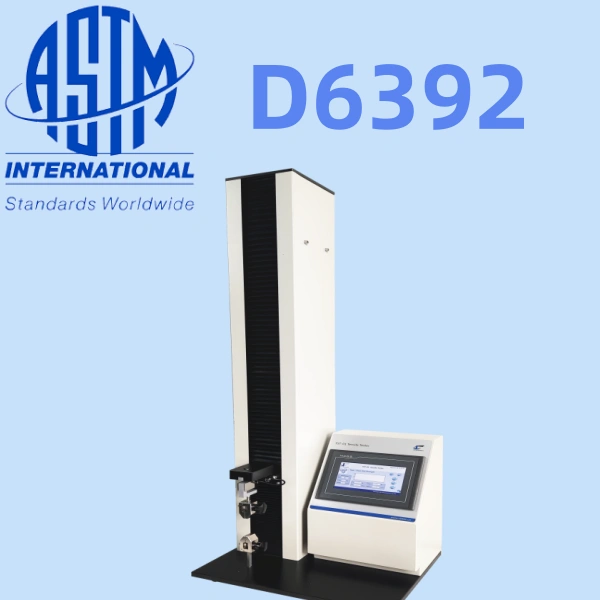
ASTM D6392
geomembrane seams test
ASTM D6392 is a critical standard for assessing the integrity of geomembrane seams, specifically those created through thermo-fusion methods. This test provides a comprehensive approach to evaluating the bond quality between geomembrane sheets using peel strength ja shear strength tests. These tests help ensure that the seams of geomembranes, which are used in applications such as landfills, ponds, and water containment systems, perform effectively under real-world conditions.
Hankige hinnapakkumineGeomembrane Seams Test: Peel and Shear Testing Procedures
Geomembranes, typically made of materials such as HDPE, LDPE, PVCja fPP, are widely used as barriers in civil engineering projects. Their effectiveness heavily depends on the quality of the seams that join the sheets of geomembrane together. To assess the integrity of these seams, ASTM D6392 outlines two key destructive tests: peel testing ja shear testing.
Peel Testing
The peel test involves subjecting the geomembrane seam to a 90-degree peel. The specimen is gripped at both ends, and a constant machine crosshead speed is applied. For materials like HDPE, PVCja LMDPE, the typical speed is 50 mm/min. For LLDPE and other flexible materials, the speed may increase to 500 mm/min. The goal is to determine how much force is required to separate the bonded geomembrane layers.
This test simulates the type of stress geomembranes might encounter in the field, such as when subjected to hydraulic pressure. High peel strength indicates that the seam can withstand separation forces effectively, ensuring that the geomembrane remains intact over time.
Shear Testing
Shear testing measures the resistance of a geomembrane seam to lateral forces. During this test, a specimen is gripped at both ends, and shear forces are applied to see how much force is required to cause failure along the seam. Shear testing is crucial for understanding how the geomembrane will hold up when subjected to shear stress, such as the frictional forces in landfills or ponds.
Sest HDPE ja LMDPE, the test proceeds until the specimen has elongated by 50%. For more flexible materials like LLDPE ja PVC, the test continues until the specimen ruptures. This helps to measure the shear strength of the seam, which is critical for maintaining the integrity of the geomembrane under dynamic loads.
Testing Materials and Seaming Methods
The materials tested under ASTM D6392 sisaldab:
HDPE (High-Density Polyethylene)
LLDPE (Linear Low-Density Polyethylene)
PVC (Polyvinyl Chloride)
fPP (Flexible Polypropylene)
VLDPE (Very Low-Density Polyethylene)
The test also evaluates seams produced by various thermo-fusion techniques, including hot air, hot wedgeja extrusion. Each of these methods creates a different type of bond between the geomembranes, and the tests help to identify the best-performing seams under real-world conditions.
Importance of ASTM D6392 in Quality Control
The geomembrane seams test as outlined in ASTM D6392 mängib otsustavat rolli kvaliteedi tagamine ja kvaliteedikontroll for the construction of geomembrane-lined systems. By using the koorimise tugevuskatse ja shear strength test, engineers and quality control personnel can assess the reliability of geomembrane seams before installation. Proper testing ensures that any issues with the seams, such as weak bonds or failures under stress, are identified and corrected during the manufacturing phase.
This proactive testing approach helps avoid potential field failures that could lead to contamination, leakage, or other performance issues. For industries like waste management, water containment, and mining, ensuring the integrity of geomembrane seams is vital for long-term environmental protection and operational success.
Järeldus
ASTM D6392 provides a reliable framework for testing the quality of geomembrane seams, which are critical in applications requiring impermeability. By conducting peel tests ja shear tests, manufacturers and quality control teams can verify that geomembrane seams will stand up to the challenges of real-world conditions. With Cell Instruments’ testing solutions, industries can ensure that their geomembrane products meet the highest standards of durability and performance.
For reliable testing, consider Cell Instruments’ tõmbetugevuse katseseadmed, which offer precision and accuracy for evaluating peel strength ja shear resistance. Our instruments are designed to support rigorous testing procedures, ensuring the highest quality standards for geomembrane seam integrity.
Contact Us Get geomembrane seams test Solution
KKK-d
Q1: What is the significance of ASTM D6392 for geomembrane seam testing?A1:
ASTM D6392 is a critical standard for evaluating the integrity of seams in geomembranes produced by thermo-fusion methods. It ensures the quality of seams by using peel ja shear strength tests. These tests help determine if the geomembrane seams can withstand the stresses they encounter during their service life, ensuring they remain intact and functional, preventing leaks or failures. This is crucial for applications such as waste containment, water reservoirs, and other geotechnical projects.
A2:
The peel test evaluates the force required to separate the layers of a geomembrane seam by applying a 90-degree angle to the seam. It simulates the stress caused by peeling forces in real-world conditions. The shear test, on the other hand, measures the ability of the geomembrane seam to resist lateral forces. It tests how much force is needed to cause a failure along the seam when subjected to stress in the plane of the geomembrane. Both tests are essential for assessing the durability of geomembrane seams under different conditions.
A3:
ASTM D6392 covers a variety of geomembrane materials, including:
HDPE (High-Density Polyethylene)
LLDPE (Linear Low-Density Polyethylene)
VLDPE (Very Low-Density Polyethylene)
PVC (Polyvinyl Chloride)
fPP (Flexible Polypropylene)
These materials are commonly used in applications such as landfill liners, water containment systems, and other civil engineering projects where impermeability is required.
Q4: How does the test speed affect the results of the peel and shear tests for geomembrane seams?A4:
The katse kiirus can impact the results of both peel and shear tests. For example, the standard peel test speed for materials like HDPE, LMDPEja PVC is usually 50 mm/min, while for more flexible materials like LLDPE ja VLDPE, the speed is typically higher (500 mm/min). The speed is chosen to simulate real-world conditions and ensure that the test accurately reflects the material’s behavior under normal service conditions. The choice of test speed is important for kvaliteedikontroll and ensuring consistent seam performance.
 ET
ET  EN
EN  ES
ES  DE
DE  FR
FR  IT
IT  AR
AR  KO
KO  JA
JA  RU
RU  PT
PT  VI
VI  ID
ID  BG
BG  CS
CS  DA
DA  EL
EL  FI
FI  HE
HE  HU
HU  LT
LT  LV
LV  NL
NL  PL
PL  RO
RO  SK
SK  SV
SV  SL
SL  UK
UK  TR
TR