
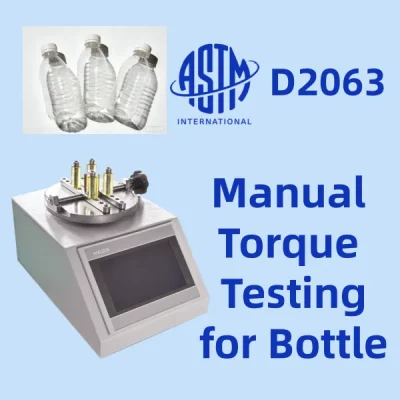
수동 토크 테스트 & 병마개 토크 테스트 & 병마개 제거 토크 테스트
수동 토크 테스트가 중요한 이유
수동 토크 테스트 는 클로저와 사람의 실제 상호작용을 반영합니다. 완전 자동화된 시스템과 달리 수동 방식은 모터 구동 아티팩트를 도입하지 않고도 제어된 적용 및 제거가 가능합니다. ASTM D2063은 다음을 명시적으로 지원합니다. 스프링 토크 미터, 다이얼 또는 디지털 토크 게이지, 토크 렌치.
품질 관리의 병뚜껑 토크 테스트
에이 병뚜껑 토크 테스트 적용 토크가 설계 목표를 충족하고 보관 중에 안정적으로 유지되는지 확인합니다. ASTM D2063은 일반적으로 마개 제조업체 지침 또는 업계 참조를 기반으로 사전 정의된 적용 토크 값을 권장합니다. 이 접근 방식은 배치와 작업자 간에 일관성을 보장합니다.
토크 유지를 위한 캡 제거 토크 테스트
그만큼 캡 제거 토크 테스트 ASTM D2063의 핵심을 형성합니다. 제거 토크는 적용 직후와 24시간, 7일 또는 28일과 같은 특정 시간 간격 후에 다시 측정합니다. 토크의 변화는 재료의 이완, 라이너 압축 설정 또는 온도와 습도 같은 환경적 영향을 나타냅니다.
ASTM D2063에 정의된 테스트 방법
정적 평가(테스트 방법 A)
정적 평가는 정해진 환경 조건에서 보관 후 토크 유지를 측정합니다. 샘플을 알려진 적용 토크로 조립하고, 주변 또는 높은 조건에서 보관한 다음 예정된 간격으로 테스트합니다.
이 방법은 다음을 지원합니다. 패키징 디자인 검증, 재료 비교 및 유통기한 연구.
동적 평가(테스트 방법 B)
동적 평가는 다음을 기반으로 배포 시뮬레이션을 통합합니다. ASTM D4169. 시뮬레이션된 배송 주기 후에 제거 토크를 측정하여 진동, 충격 및 압축이 밀폐 성능에 영향을 미치는지 확인합니다.
이 방법은 수출 포장 및 고위험 물류 환경에 특히 유용합니다.
실제 애플리케이션에서의 중요성 및 용도
ASTM D2063을 통해 엔지니어는 다음을 비교할 수 있습니다. 클로저 디자인, 소재, 라이너 및 마감재 제어된 조건에서. 제품 개발 중 의사 결정을 지원하고 토크 관련 장애를 해결하기 위한 객관적인 데이터를 제공합니다.
이 표준은 또한 다음과 같은 모범 실험실 관행을 강조합니다. 단일 운영자 및 일관된 계측 를 사용하여 변동성을 줄입니다. 이 지침은 최신 품질 관리 기대치에 부합하고 데이터 반복성을 개선합니다.
정확도에 영향을 미치는 주요 절차적 고려 사항
ASTM D2063의 몇 가지 절차적 요소는 특별히 주의해야 합니다:
- 동심 정렬 를 폐쇄 축과 토크 장치 사이에 배치하면 측정 오차를 줄일 수 있습니다.
- 일정한 속도로 균일하게 회전 인위적인 토크 스파이크를 방지합니다.
- 제어된 저장 조건 관찰된 토크 변화가 환경 노이즈가 아닌 재료의 거동을 반영하는지 확인합니다.
이러한 요소는 서면 절차만큼이나 교육 및 장비 품질이 중요한 이유를 강조합니다.
ASTM D2063 테스트에 적합한 장비 선택하기
수동 토크 테스트에는 다음과 같은 기능을 제공하는 기기가 필요합니다. 높은 정확도, 피크 캡처 기능, 안정적인 클램핑. 많은 실험실에서 셀 인스트루먼트 TT-01 토크 테스터 와 잘 어울립니다. ASTM D2063 요구 사항.
TT-01은 다음을 통해 정밀한 피크 토크 측정을 지원합니다. ±1% 정확도, 여러 국제 단위와 병, 튜브, 스파우트에 적합한 넓은 클램핑 범위를 제공합니다. 자동 피크 홀드 및 통계 분석 기능을 통해 실험실에서 복잡한 데이터 처리 없이도 토크 추세를 파악할 수 있습니다.
 KO
KO  EN
EN  ES
ES  DE
DE  FR
FR  IT
IT  AR
AR  JA
JA  RU
RU  PT
PT  VI
VI  ID
ID  BG
BG  CS
CS  DA
DA  EL
EL  ET
ET  FI
FI  HE
HE  HU
HU  LT
LT  LV
LV  NL
NL  PL
PL  RO
RO  SK
SK  SV
SV  SL
SL  UK
UK  TR
TR  BE
BE  BS
BS  HI
HI  HR
HR  KK
KK  ML
ML  MY
MY  NN
NN  SR
SR  TA
TA  UZ
UZ  SQ
SQ  TH
TH