

Loop Tack Test Method for Pressure-Sensitive Adhesives
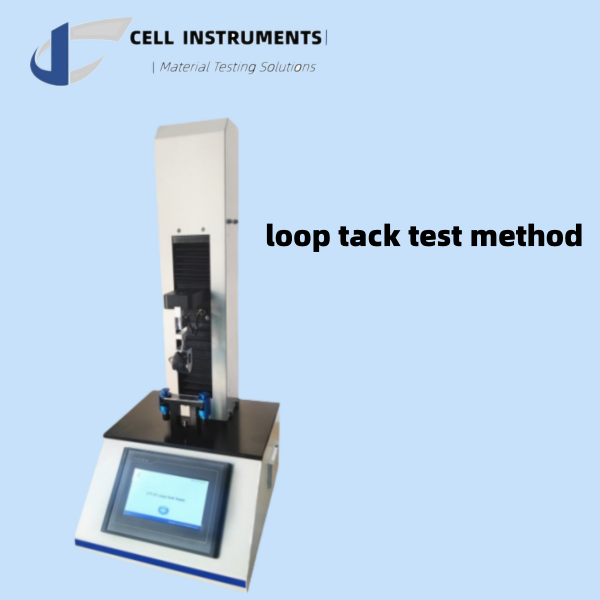
Testēšanas metodeIn the world of pressure-sensitive adhesives (PSAs), tack is the initial grab that allows a label, tape, or sticker to adhere upon brief contact. The cilpas saķeres testa metode has become a standardized and efficient way to quantify this critical performance property. This article offers a comprehensive guide on how to conduct loop tack testing in accordance with PSTC-16, ASTM D6195, un FINAT FTM 9, and introduces the Cell Instruments LTT-01 cilpu testeris—an ideal tool for quality control and R&D environments.
Understanding the Importance of Loop Tack Testing
The cilpas saķeres testa metode is widely recognized for evaluating the adhesive’s ability to form an immediate bond with a surface under minimal pressure. Unlike peel or shear tests that measure long-term bond strength, loop tack focuses on initial adhesion, making it particularly valuable for fast-moving applications such as automatic labeling, medical tapes, and temporary bonding.
Key applications include:
- Quality control in PSA tape production
- Product development of labels and self-adhesive films
- Compliance testing for ASTM D6195, PSTC-16, un FINAT FTM 9
Loop Tack Testing and Pressure Sensitive Tape Loop Tack
Test Principle and Standards Overview
Loop tack testing involves forming a loop of PSA material with the adhesive facing outward. The loop contacts a standardized test surface—usually stainless steel vai glass—and the force required to detach the loop is recorded. This force, expressed in Newtons per 10 mm vai pounds per inch, reflects the tack strength of the adhesive.
| Standarta | Loop Length | Surface Area | Key Notes |
|---|---|---|---|
| PSTC-16 | 125 mm or 175 mm | 24 mm × 24 mm | Two test methods (tensile tester or loop tack tester) |
| ASTM D6195 | 125 mm (Method B) or 175 mm (Method A) | 25 mm × 25 mm | Widely used in U.S. testing labs |
| FINAT FTM 9 | 175 mm | 25 mm × 25 mm (glass) | Preferred in Europe for label adhesives |
How to Perform the Loop Tack Test
1. Parauga sagatavošana
- Cut the specimen into 125 mm (for loop tack tester) vai 175 mm (for tensile tester) lengths, 25 mm wide.
- If testing unsupported adhesives, laminate them onto 2 mil PET film.
- Condition the specimens at 23°C ± 2°C un 50% ± 5% RH for at least 24 hours.
2. Surface Cleaning
Clean test panels thoroughly using acetone, MEKvai ethanol-based solvents. Perform at least three cleaning cycles, using lint-free wipes.
3. Test Setup
For Loop Tack Tester (Method B):
- Form the adhesive strip into a teardrop-shaped loop with adhesive facing outward.
- Attach the loop ends using 12 mm masking tape.
- Mount the loop on the upper jaw and bring it into contact with the test panel.
- The tester automatically applies and separates the loop at 300 mm/min.
For Tensile Tester (Method A):
- Izmantojiet vertical fixture that holds the stainless steel panel.
- Form a loop using 24 mm × 175 mm strips.
- Engage the crosshead to bring the loop into contact and then separate at 300 mm/min.
4. Measurement and Reporting
Record:
- Maximum force (peak tack)
- Failure mode (adhesive failure, cohesive failure, or adhesive transfer)
- Vides apstākļi
- Backing type and coating weight
Izmantojiet at least three replicates per sample and average the peak values.
Choosing the Right Loop Tack Tester
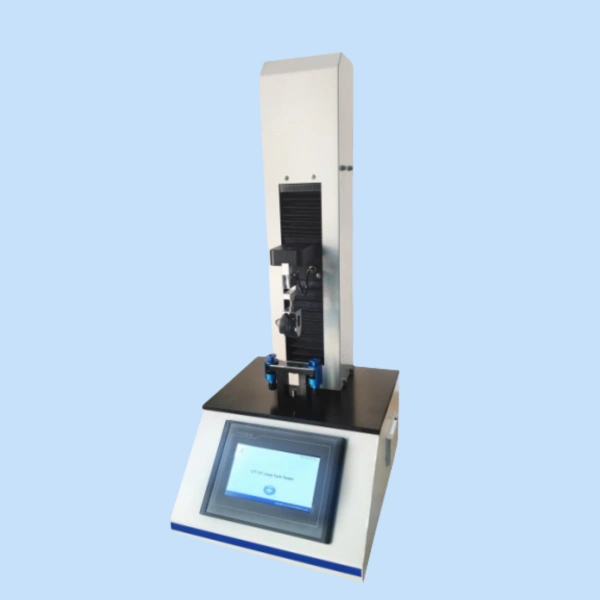
For laboratories seeking accuracy, repeatability, and compliance, un LTT-01 Loop Tack Tester līdz Šūnu instrumenti offers an optimized solution. This device fully supports ASTM D6195 Method B, PSTC-16, un FINAT FTM 9 protocols. Key features include:
- Precise force measurement with digital output
- Automated cycling for improved repeatability
- Quick-change sample fixtures for different tape types
- Lietotājam draudzīga saskarne for R&D and quality control
Whether you’re a label manufacturer or a PSA developer, the LTT-01 streamlines your tack testing process and delivers standard-compliant results every time.
Contact Us Get Loop Tack Testing Solution
The cilpas saķeres testa metode ir būtiska, lai kvantitatīvi noteiktu tūlītējās savienošanas spēju. spiedienjutīgas līmes. Ievērojot atzītus standartus, piemēram. PSTC-16, ASTM D6195, un FINAT FTM 9, un izmantojot precīzas iekārtas, piemēram. Šūnu instrumenti LTT-01, laboratorijas var nodrošināt uzticams, atkārtojams, un standarta prasībām atbilstošs līmes veiktspējas novērtējumi.
Organizācijām, kas meklē pielāgošana, automatizācija vai ekspertu atbalsts, Šūnu instrumenti piedāvā pilnīgus tehniskos risinājumus, kas pielāgoti jūsu materiālu testēšanas vajadzībām iepakojuma, medicīnas, farmācijas un citās jomās.
 LV
LV  EN
EN  ES
ES  DE
DE  FR
FR  IT
IT  AR
AR  KO
KO  JA
JA  RU
RU  PT
PT  VI
VI  ID
ID  BG
BG  CS
CS  DA
DA  EL
EL  ET
ET  FI
FI  HE
HE  HU
HU  LT
LT  NL
NL  PL
PL  RO
RO  SK
SK  SV
SV  SL
SL  UK
UK  TR
TR