

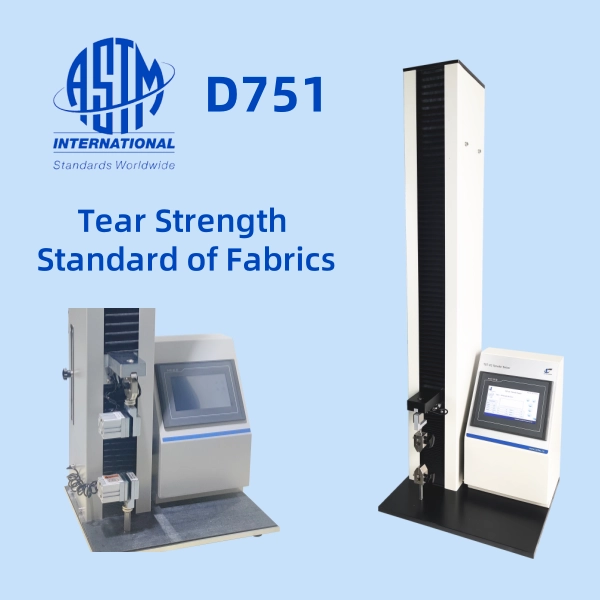
ASTM D751
Coated Fabric Test Method
ASTM D751 is a crucial standard for evaluating the performance and durability of coated fabrics. These fabrics are used in various applications, such as packaging, medical devices, and textiles, where strength and resistance to wear are essential. The Coated Fabric Test Method under ASTM D751 outlines a variety of tests to measure breaking strength, elongation, bursting strength, and more. These tests ensure that materials meet the rigorous standards required for their intended applications.
Get QuoteCoated Fabric Test Method Overview
The Coated Fabric Test Method in ASTM D751 involves several key procedures for evaluating the physical properties of coated fabrics. These include the grab test method for breaking strength, the elongation at break, bursting strength tests, puncture resistance, and tear strength evaluations. These methods help determine the material’s ability to withstand mechanical stresses, making them essential for ensuring the quality and reliability of coated fabrics in real-world applications.
Breaking Strength Test: Grab Test Method
The grab test method is one of the most widely used techniques for determining the breaking strength of coated fabrics. This test measures the force at which a fabric ruptures when subjected to a tensile load. Breaking strength is a key performance indicator for materials used in high-stress applications, such as heavy-duty packaging or protective textiles.
Procedure for the Grab Test Method
- Specimen Preparation: Samples are cut into a specific size, typically 102 mm (4 inches) in width and 152 mm (6 inches) in length. The fabric is then placed in the testing machine, ensuring it is aligned correctly.
- Machine Setup: The specimen is clamped at both ends, and the machine applies a uniform pulling force at a speed of 5 ± 0.2 mm/s (12 ± 0.5 in./min).
Measurement: The machine records the force applied to the fabric until it breaks, providing critical data on the fabric’s tensile strength and elongation at break.
The results from the grab test method give insight into the durability of the fabric, especially its resistance to rupture when subjected to external forces. For applications such as protective packaging or outdoor textiles, high tensile strength is essential for ensuring the material can withstand heavy use.
Elongation at Break
Elongation measures the fabric’s ability to stretch before it breaks. This is particularly important for packaging materials, as fabrics with high elongation can absorb more stress, preventing damage during handling and transportation.
Procedure for Measuring Elongation:
- After conducting the grab test, the elongation is calculated as the percentage increase in the fabric’s length.
- The elongation results are averaged across multiple test specimens to determine the fabric’s overall performance.
Bursting Strength Test
The bursting strength test measures the pressure at which a coated fabric will rupture when subjected to hydraulic or mechanical pressure. This test is critical for packaging materials that must withstand high-pressure environments.
Testing Methods for Bursting Strength:
Ball Burst Method: A polished steel ball applies pressure to the fabric until it bursts. This method measures the fabric’s resistance to sudden, localized pressure.
Diaphragm Burst Method: A hydraulic pressure system inflates a diaphragm beneath the fabric, increasing pressure until rupture occurs. This method simulates the fabric’s ability to handle pressure over a larger surface area.
Both methods provide insights into the fabric’s bursting strength, which is essential for materials that will be exposed to internal pressures, such as sealed food packaging or medical pouches.
Fabric Tear Strength Test
Tear strength measures the resistance of a fabric to tearing under stress. Coated fabrics used in packaging and textiles must have sufficient tear strength to withstand handling, shipping, and rough conditions.
Tear Test Methods:
Pendulum Test Method: A pendulum applies a force to the fabric until it tears. This method measures the fabric’s resistance to tear under dynamic loading conditions.
Tongue Tear Test Method: A specimen is cut into a tongue shape, and force is applied to tear the fabric. The force required to initiate and propagate the tear is recorded.
Both methods help evaluate the fabric’s tear strength, ensuring that it will hold up under typical handling conditions without tearing prematurely.
Puncture Resistance Test: Protecting Against Sharp Objects
The puncture resistance test measures a fabric’s ability to resist punctures from sharp objects, a crucial property for packaging materials that must protect sensitive products from damage. This test is typically used for materials such as flexible packaging, medical packaging, or protective clothing.
Puncture Resistance Testing Procedure:
A piercing instrument, resembling a flat-tip screwdriver, applies force to the fabric until it punctures.
The force required to puncture the fabric is recorded, providing valuable data on the material’s resistance to sharp objects.
A high puncture resistance rating is essential for packaging materials used in industries such as food, pharmaceuticals, or electronics, where the risk of puncture damage is significant.
Trapezoidal Tear Test: Advanced Evaluation of Tear Resistance
Testing Procedure:
A rectangular fabric specimen is cut with a trapezoidal shape, and force is applied to tear the fabric along the cut.
The force required to tear the fabric is measured, giving a detailed view of its tear resistance.
This test is commonly used in packaging and textiles where fabric durability under stress is paramount.
ASTM D751 provides a comprehensive framework for testing the performance and durability of coated fabrics. From the grab test method for breaking strength to the puncture resistance test for sharp object resistance, each test method plays a crucial role in ensuring the material’s suitability for its intended application. Coated fabrics must be tested thoroughly to guarantee they meet industry standards for safety and performance.
For professionals in the industry, utilizing Cell Instruments’ Tear Testers and Tensile Testers ensures that accurate and reliable results are achieved in line with ASTM D751 standards. These instruments help manufacturers produce high-quality coated fabrics that can withstand the rigorous demands of the real world.
Contact Us Get ASTM D751 Testing Solution
Q: What is ASTM D751 primarily used for?A: ASTM D751 is primarily used to test the performance of coated fabrics, covering tests such as breaking strength, elongation, bursting strength, tear strength, and puncture resistance.
Q: What is the “Grab Test Method” in ASTM D751?A: The Grab Test Method is used to test the breaking strength of coated fabrics. The fabric sample is held between clamps, and a uniform pulling force is applied until the fabric ruptures, measuring its strength.
Q: How is bursting strength of coated fabrics tested in ASTM D751?A: The bursting strength of coated fabrics can be tested using the “Ball Burst Method” or “Diaphragm Burst Method,” where pressure is applied perpendicular to the fabric until rupture occurs. The required pressure is recorded as the fabric’s bursting strength.
Q: What is “Puncture Resistance Testing”?A: Puncture resistance testing measures the ability of coated fabrics to resist puncturing. A blunt-tip instrument is used to puncture the fabric, and the force required to penetrate the fabric is measured to assess its puncture resistance.
Q: What is the relationship between “Tensile Testing” and “Tear Strength” in ASTM D751?A: Tensile testing measures the strength of fabric when stretched, while tear strength testing measures the fabric’s resistance to tearing. Both tests help assess the fabric’s performance under different stresses.
 EN
EN  ES
ES  DE
DE  FR
FR  IT
IT  AR
AR  KO
KO  JA
JA  RU
RU  PT
PT  VI
VI  ID
ID  BG
BG  CS
CS  DA
DA  EL
EL  ET
ET  FI
FI  HE
HE  HU
HU  LT
LT  LV
LV  NL
NL  PL
PL  RO
RO  SK
SK  SV
SV  SL
SL  UK
UK  TR
TR