

Випробування паперу на стійкість до розриву
Метод тестування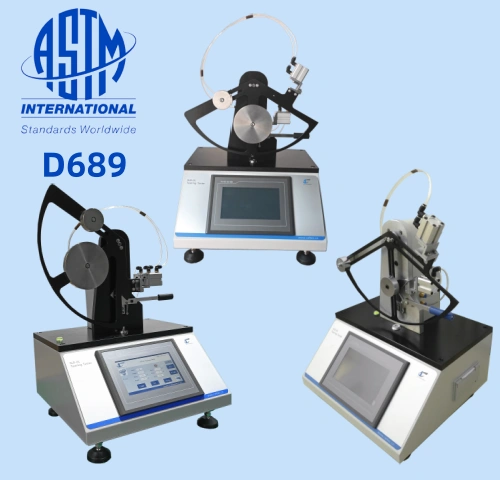
The tear resistance test of paper plays a critical role in evaluating how paper materials withstand tearing forces during converting, printing, packaging, and end use. Paper with insufficient tearing resistance may fail during processing or handling, while excessive tearing resistance can indicate poor runnability. ASTM D689 establishes a standardized and widely recognized approach for measuring the tearing resistance of paper, allowing manufacturers, laboratories, and quality professionals to obtain consistent and comparable results.
By applying an Elmendorf tear strength tester, this method quantifies the force required to propagate a tear through paper under controlled conditions. The results help predict performance, compare paper grades, and support material optimization.
Why the Tear Resistance Test of Paper Matters
The tear resistance test of paper measures internal fiber bonding strength rather than surface properties. Unlike tensile testing, which evaluates resistance to pulling, tearing resistance reflects how well fibers resist crack propagation once a tear has started. This distinction makes ASTM D689 especially valuable for applications where paper experiences sudden stress, cutting, or snagging.
Industries rely on this test to:
Assess durability during converting and packaging
Compare paper quality across production batches
Support product development and material selection
Meet customer and regulatory specifications
Because of its proven relevance, ASTM D689 aligns closely with other global standards such as ISO 1974 and TAPPI T414.
ASTM D689 and the Principle of Elmendorf Tearing Measurement
ASTM D689 defines a tear resistance test of paper based on the Elmendorf principle. The method uses a pendulum to apply a rapid tearing force perpendicular to the plane of the paper. As the pendulum tears the specimen through a fixed distance, it loses potential energy. That energy loss directly relates to the tearing resistance of paper.
Ан Elmendorf tear strength tester converts this energy into a force value displayed on a calibrated scale. When multiple plies are tested together, the result represents the average force per ply, ensuring accuracy even for lightweight or high-strength papers
Elmendorf Tear Strength Tester and ASTM D689 Compliance
Ан elmendorf tear strength tester designed for ASTM D689 must deliver stable pendulum motion, precise clamping, and accurate scale calibration. Proper instrument setup ensures repeatable and meaningful results in the tear resistance test of paper.
Modern systems, such as the Cell Instruments SLD-01 Tear Tester, support ASTM D689 testing by offering:
High mechanical stability for consistent tearing action
Clear digital or analog force reading
Easy adjustment for different paper grades and ply numbers
Reliable performance in quality control and R&D environments
Selecting a compliant tester directly affects test confidence and long-term data reliability.
Step-by-Step Tear Resistance Test of Paper Procedure
The tear resistance test of paper under ASTM D689 follows a structured workflow designed to reduce variability:
Кондиціонування зразка
Paper specimens are conditioned under standard atmospheric conditions to minimize the influence of moisture and temperature.Підготовка зразків
Based on paper strength, a suitable number of plies is selected. The goal is to achieve a reading near the optimal range of the Elmendorf scale.Налаштування приладу
The elmendorf tear strength tester is leveled, the pendulum is raised to its starting position, and the pointer is set to zero.Clamping and slit preparation
The specimen is centered in the clamps and secured evenly. An initial slit is introduced to ensure consistent tear initiation.Tear execution
The pendulum is released, tearing the paper through a defined distance. The tearing resistance of paper is determined from the pendulum’s energy loss.Recording results
The scale reading and number of plies are recorded. Tests are performed in both machine and cross directions when applicable.Result validation
Invalid tears that deviate from the required tear path are rejected, preserving data integrity.
This systematic process ensures that ASTM D689 results accurately reflect internal tearing resistance.
Understanding and Using ASTM D689 Test Results
ASTM D689 results represent the tearing resistance of paper in units of force. Reports typically include average, maximum, and minimum values for each direction tested. These values help users:
Compare paper grades objectively
Monitor production consistency
Predict end-use performance
Identify fiber orientation effects
When combined with tensile, burst, or folding tests, the tear resistance test of paper contributes to a comprehensive strength profile.
Supporting Quality Control with Reliable Testing Solutions
Accurate implementation of ASTM D689 depends on both method knowledge and equipment quality. By combining standardized procedures with a dependable elmendorf tear strength tester, laboratories can maintain confidence in their tear resistance test of paper результати.
Instruments such as the Стільникові інструменти Тестер SLD-01 provide a practical solution for manufacturers seeking repeatability, compliance, and efficiency.

Висновок
In summary, ASTM D689 offers a proven framework for evaluating the tear resistance test of paper. By understanding the test principle, following proper procedures, and using compliant instrumentation, paper professionals can ensure reliable data that supports quality assurance and product performance.
поширені запитання
Q1: What is the tear resistance test of paper?The tear resistance test of paper measures the force required to tear a paper sheet using a controlled method. This test evaluates the paper’s durability and predicts performance in printing, packaging, and other applications.
Q2: What types of paper can be tested using ASTM D689?The standard is suitable for a wide range of papers, including printing and writing papers, packaging materials, industrial sheets, and coated or uncoated paper. Highly directional boards may require alternative tests.
Q3: How does the Elmendorf tear strength tester work?The Elmendorf tear strength tester uses a pendulum to tear the paper. The energy lost by the pendulum is converted into a reading, reflecting the tearing resistance of paper. Modern testers like the Cell Instruments SLD-01 provide precise and repeatable results.
Q4: How should specimens be prepared for testing?Specimens should be conditioned under standard atmospheric conditions. The number of plies is selected based on product specifications, and plies must be oriented consistently. A small slit is introduced to control tear initiation.
 UK
UK  EN
EN  ES
ES  DE
DE  FR
FR  IT
IT  AR
AR  KO
KO  JA
JA  RU
RU  PT
PT  VI
VI  ID
ID  BG
BG  CS
CS  DA
DA  EL
EL  ET
ET  FI
FI  HE
HE  HU
HU  LT
LT  LV
LV  NL
NL  PL
PL  RO
RO  SK
SK  SV
SV  SL
SL  TR
TR