
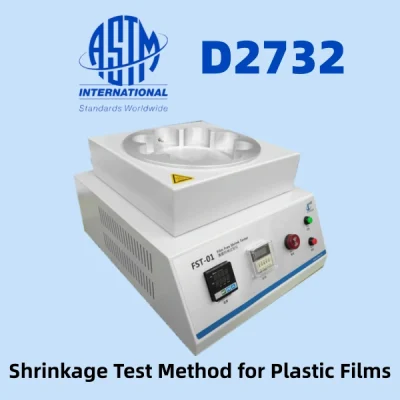
ASTM D2732 क्या है और यह क्यों महत्वपूर्ण है
एएसटीएम डी2732 का मूल्यांकन करने के लिए एक मानकीकृत दृष्टिकोण परिभाषित करता है अनियंत्रित रैखिक तापीय संकुचन प्लास्टिक फिल्म और शीटिंग (≤0.76 मिमी मोटाई)। व्यावहारिक रूप से, यह विधि यह मात्रा निर्धारित करती है कि उच्च तापमान के संपर्क में आने पर फिल्म कितनी सिकुड़ती है। बाहरी प्रतिबंधों के बिना.
फिल्म निर्माण के दौरान—जैसे एक्सट्रूज़न या ओरिएंटेशन—पदार्थ की संरचना में आंतरिक तनाव उत्पन्न किए जाते हैं।. जब गर्मी लागू की जाती है, तो ये तनाव शिथिल हो जाते हैं, जिससे आयामी संकुचन होता है। इस व्यवहार को समझना निम्नलिखित के लिए महत्वपूर्ण है:
- पैकेजिंग की अखंडता (जैसे, सिकुड़न रैप, लेबल)
- चिकित्सा पैकेजिंग में सील प्रदर्शन
- औद्योगिक फिल्मों में आयामी स्थिरता
ASTM D2732 एक पुनरावृत्ति योग्य ढांचा प्रदान करता है। विभिन्न तापमानों पर संकुचन को मापना, जिससे इंजीनियरों और QC टीमों को प्रदर्शन को प्रसंस्करण स्थितियों से संबंधित करने में सक्षम बनाया जा सके।.
तापीय संकुचन परीक्षण विधि
The तापीय संकुचन परीक्षण विधि ASTM D2732 में वर्णित यह मानक तरल स्नान के वातावरण में नियंत्रित तापीय संपर्क पर केंद्रित है।.
मुख्य तकनीकी सिद्धांतों में शामिल हैं:
- अनियंत्रित स्थिति: नमूना को बिना यांत्रिक हस्तक्षेप के स्वतंत्र रूप से सिकुड़ना चाहिए।.
- तापीय संतुलन: अधिकतम संकुचन प्राप्त करने के लिए नमूना को स्थिर तापमान तक पहुँचना चाहिए।.
- द्विदिश मापन: सिकुड़न दोनों में आंकी जाती है। मशीन दिशा (एमडी) और अनुप्रस्थ दिशा (TD).
आलोचनात्मक अंतर्दृष्टि: सिकुड़न स्थिर नहीं होती—यह तापमान के साथ काफी भिन्न होती है। इसलिए, कई तापमान बिंदुओं पर परीक्षण करने से एक सिकुड़न प्रोफ़ाइल, सिर्फ एक मान नहीं।.
सिकुड़न परीक्षण प्रक्रिया
एक मानकीकृत सिकुड़न परीक्षण प्रक्रिया सटीकता और पुनरुत्पादकता सुनिश्चित करता है:
नमूना तैयारी
- काटें 100 मिमी × 100 मिमी के नमूने
- कम से कम का उपयोग करें प्रत्येक परीक्षण तापमान पर दो नमूने
- आवश्यकता पड़ने पर मशीन की दिशा चिह्नित करें।
परीक्षण निष्पादन
- नमूने को एक में रखें नि:शुल्क श्रांक धारक बाधा से बचना
- डुबोने से पहले स्नान का तापमान दर्ज करें।
- नमूने को के लिए डुबोएँ लगभग 10 सेकंड (या संतुलन तक)
- तुरंत शीतलक माध्यम में स्थानांतरित करें।
- स्थिरीकरण के बाद अंतिम आयाम मापें।
महत्वपूर्ण सावधानियाँ:
- डुबोने से पहले नमूने को पूर्व-तापित करने से बचें।
- संभालते समय नमूने को खिंचने से रोकें
- स्नान के तापमान का समान वितरण सुनिश्चित करें।
सिकुड़न की गणना
सिकुड़न(%)=L0L0−Lf×100
कहाँ:
- L0: प्रारंभिक लंबाई (आमतौर पर 100 मिमी)
- Lf: संकुचन के बाद अंतिम लंबाई
यह सूत्र प्रदान करता है रेखीय संकुचन का प्रतिशत, सामग्री की तुलना और गुणवत्ता नियंत्रण के लिए एक प्रमुख पैरामीटर।.
फिल्म फ्री श्रिंक टेस्टर: परीक्षण सटीकता में सुधार
ए फिल्म फ्री श्रिंक टेस्टर ASTM D2732 को उच्च सटीकता के साथ निष्पादित करने के लिए यह आवश्यक है। मैनुअल सेटअप की तुलना में, समर्पित उपकरण प्रदान करते हैं:
- स्थिर तापमान नियंत्रण (±0.3°C)
- तरल माध्यम द्वारा समान ताप
- नियंत्रित डुबकी समय
- निरंतर अनियंत्रित परिस्थितियाँ
उदाहरण के लिए, सेल उपकरण एफएसटी-01 फिल्म फ्री श्रिंक टेस्टर प्रयोगशालाओं को सक्षम बनाता है:
- वास्तविक दुनिया की सिकुड़न स्थितियों का अनुकरण करें
- दोहराए जाने योग्य संकुचन डेटा उत्पन्न करें
- ऑपरेटर-प्रेरित परिवर्तनशीलता को कम करें
इसका पीआईडी-नियंत्रित हीटिंग सिस्टम और मानकीकृत फिक्स्चर परिचालन दक्षता में सुधार करते हुए ASTM D2732 के अनुपालन को सुनिश्चित करें।.
ASTM D2732 परिणामों को प्रभावित करने वाले प्रमुख कारक
परिणामों की सही व्याख्या करने के लिए, निम्नलिखित चरों पर विचार करें:
1. सामग्री संरचना
विभिन्न पॉलिमर (PET, PVC, PE) आणविक अभिविन्यास और क्रिस्टलीयता के कारण विशिष्ट संकुचन व्यवहार प्रदर्शित करते हैं।.
2. प्रसंस्करण इतिहास
फिल्म खिंचाव अनुपात, शीतलन दरें और एनिलिंग सीधे प्रभावित करते हैं। शेष तनाव स्तर.
3. तापमान चयन
कई तापमानों पर परीक्षण से पता चलता है:
- सिकुड़न की शुरुआत
- अधिकतम संकुचन बिंदु
- तापीय संक्रमण व्यवहार
४. मोटाई और संरचना
मोटी या बहु-परत फिल्में संतुलन तक पहुँचने के लिए अधिक डुबाव समय की आवश्यकता हो सकती हैं।.
पूछे जाने वाले प्रश्न
1. ASTM D2732 परीक्षण के लिए कौन सी सामग्री उपयुक्त हैं?
0.76 मिमी या उससे कम मोटाई वाली प्लास्टिक फिल्में और शीटें, जिनमें पीईटी, पीई, पीवीसी और बहु-परत लैमिनेट शामिल हैं।.
2. अनियंत्रित संकुचन महत्वपूर्ण क्यों है?
यह बाहरी बलों के बिना अंतर्निहित भौतिक व्यवहार को दर्शाता है, प्रदान करते हुए वास्तविक संकुचन गुण.
3. नमूनों को कितनी देर तक डुबोकर रखना चाहिए?
आमतौर पर 10 सेकंड, लेकिन मोटी या नई सामग्रियों के लिए पूर्ण संकुचन सुनिश्चित करने हेतु सत्यापन की आवश्यकता हो सकती है।.
4. एमडी और टीडी सिकुड़न में क्या अंतर है?
एमडी (मशीन दिशा) फिल्म उत्पादन की दिशा के अनुरूप होता है, जबकि टीडी लंबवत होता है—दोनों प्रदर्शन को अलग-अलग प्रभावित करते हैं।.
5. कर सकता है एएसटीएम डी2732 क्या इसका उपयोग सॉल्वेंट-आधारित संकुचन के लिए किया जा सकता है?
नहीं, यह विलायक हानि के कारण होने वाली संकुचन को ध्यान में नहीं रखता।.
 HI
HI  EN
EN  ES
ES  DE
DE  FR
FR  IT
IT  AR
AR  KO
KO  JA
JA  RU
RU  PT
PT  VI
VI  ID
ID  BG
BG  CS
CS  DA
DA  EL
EL  ET
ET  FI
FI  HE
HE  HU
HU  LT
LT  LV
LV  NL
NL  PL
PL  RO
RO  SK
SK  SV
SV  SL
SL  UK
UK  TR
TR  BE
BE  BS
BS  HR
HR  KK
KK  ML
ML  MY
MY  NN
NN  SR
SR  TA
TA  UZ
UZ  SQ
SQ  TH
TH