

Test ścierania tuszu
Metoda testowaniaDrukowane opakowania, etykiety i grafiki komercyjne są narażone na znaczne zużycie podczas przechowywania, wysyłki i obsługi. Zapewnienie ich trwałości wymaga niezawodnych metod oceny. Jedną z najbardziej uznanych technik jest test ścierania tuszu, jest znormalizowanym sposobem pomiaru odporności na ścieranie materiałów drukowanych. Niniejszy artykuł przedstawia test ścierania farby drukarskiej, wyjaśnia procedurę ASTM D5264 i podkreśla, w jaki sposób tester odporności na tarcie zapewnia spójne wyniki.
Dlaczego test rozcierania tuszu ma znaczenie w druku i pakowaniu?
Ścieranie jest jedną z najczęstszych przyczyn degradacji druku. Podczas transportu i użytkowania tarcie może powodować rozmazywanie, blaknięcie lub przenoszenie atramentu, prowadząc do:
- Zmniejszony wygląd i czytelność marki
- Niezadowolenie klienta z powodu złej prezentacji produktu
- Kwestie zgodności w branżach regulowanych, w których przejrzystość etykiet ma kluczowe znaczenie
Przeprowadzając Test odporności tuszu na ścieranie, Producenci mogą ocenić, czy ich materiały drukowane są w stanie wytrzymać te rzeczywiste warunki. Zapewnia to zarówno jakość produktu, jak i zaufanie konsumentów.
ASTM D5264 i jego rola w testowaniu odporności na ścieranie atramentu
Najczęściej cytowane wytyczne dotyczące tej oceny to ASTM D5264 - Standardowa praktyka w zakresie odporności na ścieranie materiałów drukowanych za pomocą testu Sutherland Rub Tester. Norma ta określa sposób pomiaru trwałości druku przy użyciu kontrolowanych cykli tarcia między próbką a powierzchnią receptora.
Kluczowe cechy normy ASTM D5264 obejmują:
- Konfiguracja testowa: Materiał drukowany jest montowany na gumowej podkładce, podczas gdy receptor jest przymocowany do obciążnika o masie 2 funtów (0,91 kg) lub 4 funtów (1,82 kg).
- Działanie: Receptor przesuwa się w przód i w tył nad wydrukiem, wykonując określoną liczbę ruchów. Każdy ruch to jeden pełny cykl.
- Ocena: Po teście wydruk jest sprawdzany pod kątem widocznej degradacji, a receptor jest analizowany pod kątem transferu atramentu.
- Aplikacje: Praktyka ta jest odpowiednia dla atramentów, powłok, laminatów i podłoży i może być dostosowana do badania efektów produktu, takich jak kontakt z detergentami lub żywnością.
Metoda ta zapewnia powtarzalny sposób porównywania odporności na ścieranie w kontrolowanych warunkach, umożliwiając zarówno nabywcom, jak i dostawcom uzgodnienie standardów wydajności.
Korzystanie z testera odporności na pocieranie w celu uzyskania spójnych wyników
Wykonywanie test ścierania tuszu nie jest praktyczne w nowoczesnych środowiskach produkcyjnych. A tester odporności na tarcie automatyzuje proces, zapewniając dokładność i powtarzalność. Przyrządy te odwzorowują ruch i ciśnienie zdefiniowane w normie ASTM D5264, umożliwiając jednocześnie elastyczną kontrolę parametrów.
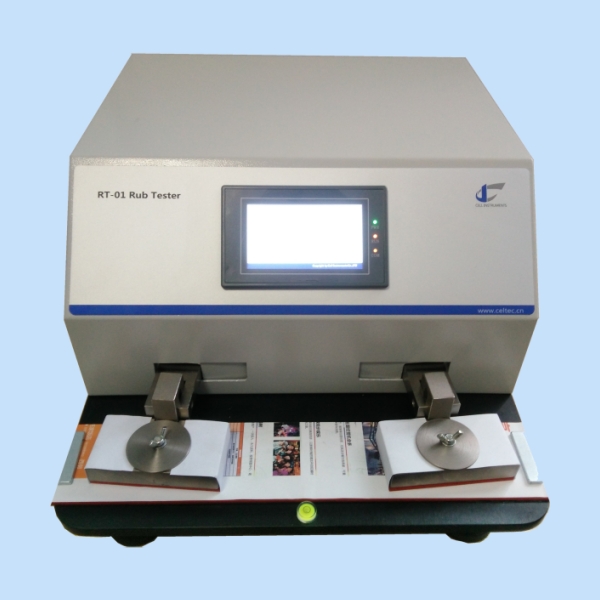
Na przykład Cell Instruments RT-01 Tester tarcia zapewnia:
- Regulowana prędkość od 20-120 cykli na minutę
- Możliwość wyboru przez użytkownika wagi 2 lb lub 4 lb
- Kontrola uderzeń i liczenie cykli za pomocą ekranu dotykowego
- Monitorowanie postępu testu w czasie rzeczywistym
- Opcjonalna podgrzewana płyta dla zaawansowanych potrzeb testowych
Symulując rzeczywiste warunki tarcia, RT-01 pomaga producentom określić, czy ich opakowania i etykiety mogą wytrzymać wymagające środowiska obsługi.
Aby uzyskać dokładne wyniki, laboratoria i producenci powinni:
- Używaj odpowiednio konserwowanych podkładek, wymieniając je, gdy się zużyją lub utlenią.
- Wybierz odpowiednią wagę w zależności od oczekiwanego stopnia ścierania.
- Przed badaniem upewnić się, że próbki i receptory są wolne od kurzu lub cząstek zewnętrznych.
- Porównanie wyników testów z normami referencyjnymi w celu zachowania spójności.
Zastosowania testu odporności na ścieranie atramentu
Test pocierania atramentem jest szeroko stosowany w różnych branżach, w tym:
- Opakowanie: Zapewnienie czytelności etykiet na opakowaniach żywności, napojów i produktów farmaceutycznych.
- Tekstylia i powłoki: Sprawdzanie trwałości nadruków na tkaninach lub powlekanych powierzchniach.
- Kleje i laminaty: Ocena odporności na ścieranie, gdy materiały warstwowe mogą się o siebie ocierać.
- Agencje kontroli jakości: Zapewnienie znormalizowanych, raportowalnych wyników audytów zgodności.
 PL
PL  EN
EN  ES
ES  DE
DE  FR
FR  IT
IT  AR
AR  KO
KO  JA
JA  RU
RU  PT
PT  VI
VI  ID
ID  BG
BG  CS
CS  DA
DA  EL
EL  ET
ET  FI
FI  HE
HE  HU
HU  LT
LT  LV
LV  NL
NL  RO
RO  SK
SK  SV
SV  SL
SL  UK
UK  TR
TR