Standard: ASTM D5264, TAPPI T830, ASTM F1571, FINAT FTM 27, ASTM F2497, JIS K 5701
Manufacturer: Cell Instruments
Applications: Packaging materials, medical device materials, pharmaceutical testing, adhesives, textiles, paper and cardboard containers, and more.
Customization: Available for special testing requirements and automation transformations
I. Introduction to the Ink Abrasion Resistance Tester
1. Description of the Ink Abrasion Resistance Tester
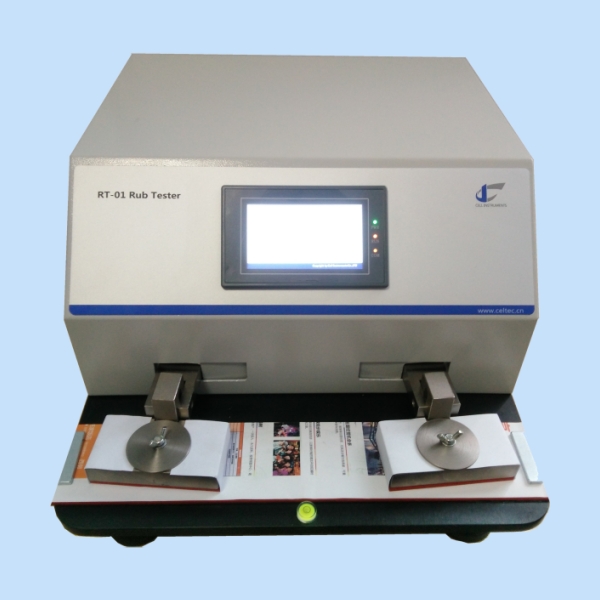
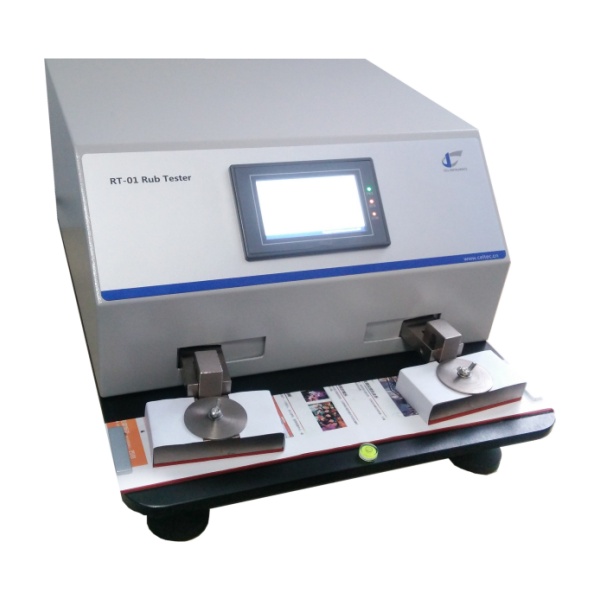
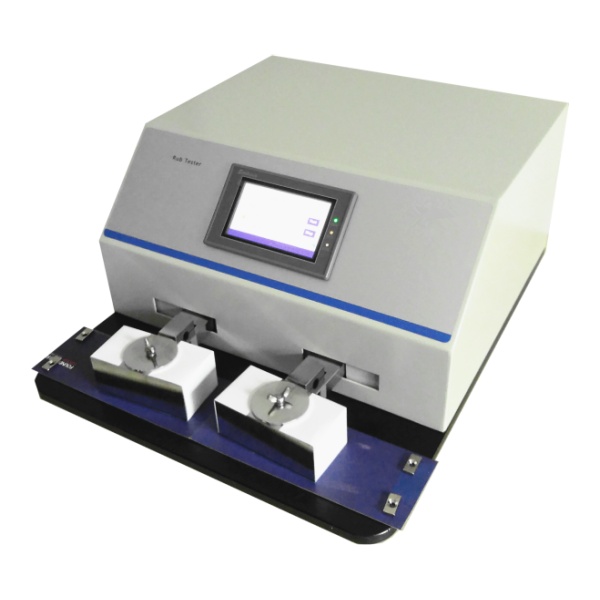
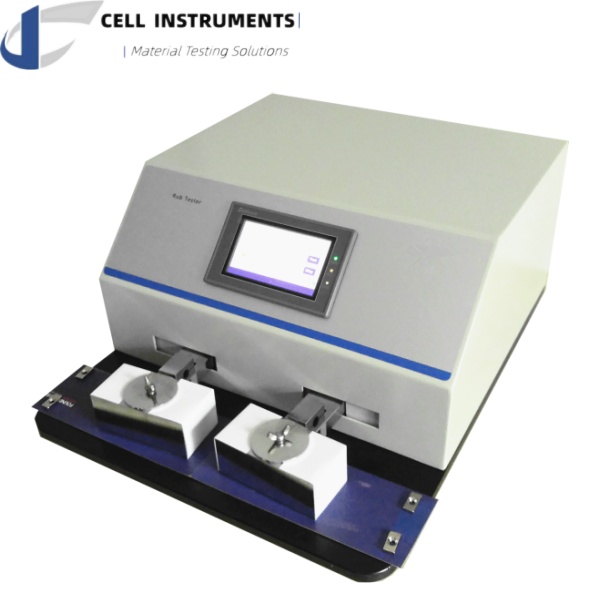
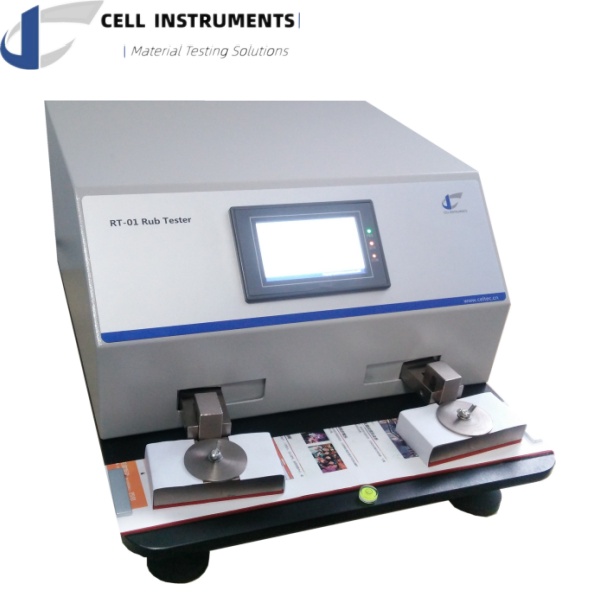
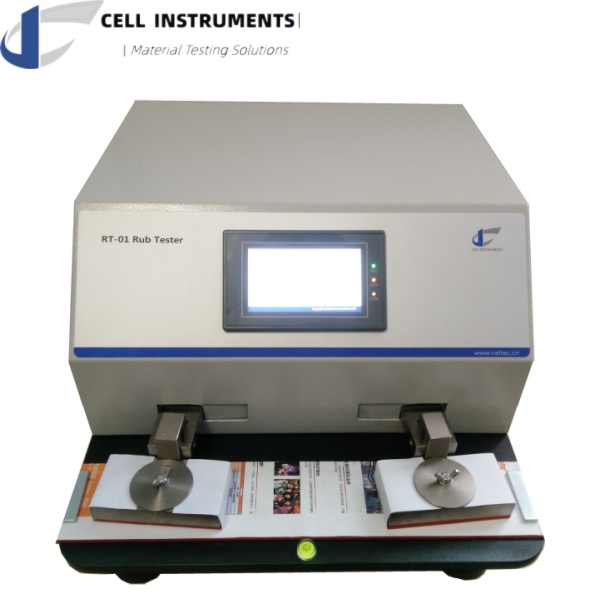
The Ink Abrasion Resistance Tester is a specialized instrument designed to evaluate the durability and longevity of printed inks and coatings on various substrates. This advanced testing equipment simulates the wear and tear that printed materials undergo during handling, transportation, and usage, ensuring that the inks and coatings maintain their quality over time.
2. Key Features and Benefits
PLC Controlled Unit: Offers industrial-level stability and reliability, ensuring consistent performance and accuracy in every test.
HMI Touch Screen Operation: User-friendly interface that simplifies the setup and operation process, making it accessible even for users with minimal technical experience.
Versatile Testing: Capable of performing various types of tests, including dry rub, wet rub, wet bleed or transfer, wet smear, and functional rub, making it adaptable to different testing needs.
Test Speed Adjustment: Provides flexibility to set the test speed according to specific requirements, ensuring the relevance and accuracy of test results.
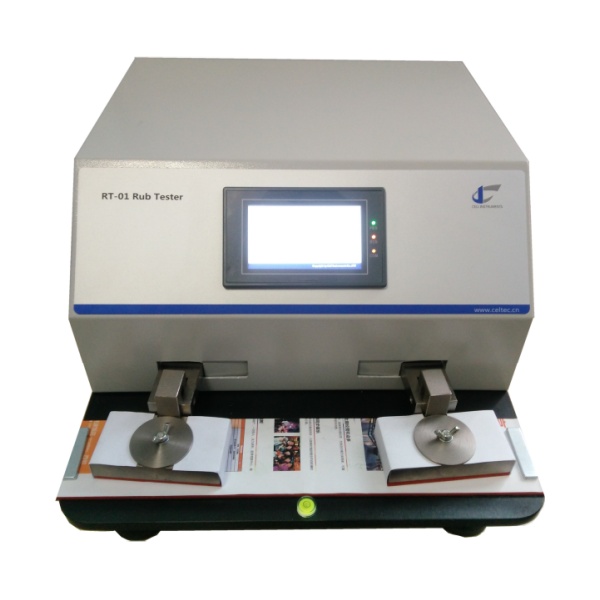
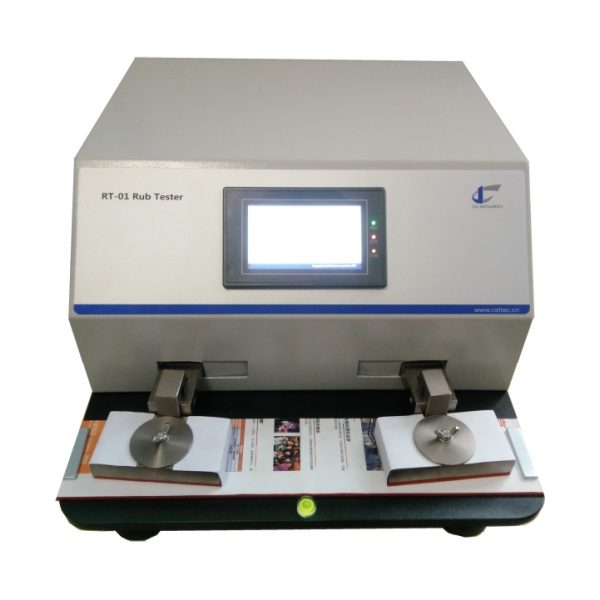
Double Test Station: Equipped with an arc movement structure that allows for simultaneous testing of two samples, increasing efficiency and throughput.
Precise Rub Circle Control: Ensures precise control over the rubbing circle, which is essential for accurate and consistent test results.
3. Applications
Industries and Sectors: The Ink Abrasion Resistance Tester is widely used in industries such as packaging, textiles, electronics, and quality inspection agencies.
Specific Use Cases: Common applications include testing the durability of printed packaging materials, labels on textiles, and markings on electronic components.
II. Technical Specifications
The Ink Abrasion Resistance Tester comes with a range of technical specifications that cater to various testing needs:
Weights
908g (2lb) /8.9N;1816g(4lb) /17.8N
Speed
20~120 cpm free setting
Number of Specimens
1~2
Rotation Radius
185 mm
Arc Length
57 mm ± 1 mm
Dimension
390x480x220 mm (LWH)
Power
110~220V 50/60Hz
III. Test Methods
1. General Test Procedure
Preparation of Samples: Samples must be prepared according to specific guidelines to ensure uniformity and accuracy in testing.
Setting Up the Tester: The tester is set up according to the test requirements, including the selection of test speed, pressure, and duration.
Conducting the Test: The samples are subjected to the rubbing motion, simulating real-world conditions.
Analyzing and Interpreting Results: Post-test analysis involves assessing the degree of ink abrasion and interpreting the results to determine the durability of the ink.
Purpose and Scope: Focuses on the abrasion resistance of printed electronic components.
Test Procedure: Involves a more precise and controlled testing environment to simulate the conditions electronic components face.
Results: Ensures that printed electronics can withstand handling and usage without degradation.
IV. Customization
Customization Options
The Ink Abrasion Resistance Tester offers various customization options to meet specific testing requirements. Users can customize:
Test Speed and Pressure Settings: Adjust according to material and industry standards.
Sample Holders: Designed to accommodate different sample sizes and shapes.
V. The Importance of Ink Abrasion Resistance Test
Ink abrasion resistance testing is crucial for ensuring the longevity and quality of printed materials. It helps manufacturers and quality control laboratories to:
Maintain Product Quality: Ensures that printed materials remain legible and aesthetically pleasing over time.
Meet Industry Standards: Compliance with standards such as ASTM D5264, TAPPI T830, ASTM F1571, FINAT FTM 27, and ASTM F2497.
Enhance Customer Satisfaction: Products with durable printing lead to higher customer satisfaction and brand loyalty.

 EN
EN  ES
ES  DE
DE  FR
FR  IT
IT  AR
AR  KO
KO  JA
JA  RU
RU  PT
PT  VI
VI  ID
ID  BG
BG  CS
CS  DA
DA  EL
EL  ET
ET  FI
FI  HE
HE  HU
HU  LT
LT  LV
LV  NL
NL  PL
PL  RO
RO  SK
SK  SV
SV  SL
SL  UK
UK  TR
TR  BE
BE  BS
BS  HI
HI  HR
HR  KK
KK  ML
ML  MY
MY  NN
NN  SR
SR  TA
TA  UZ
UZ  SQ
SQ