
ASTM G143
ASTM G143 testing systems provide a practical method for characterizing the friction behavior of flexible materials under conditions that closely resemble actual web handling processes. Unlike flat-surface friction tests, web/roller friction testing evaluates the interaction between a moving web and a cylindrical surface, making it particularly valuable for converting and transport applications.
Modern testing equipment can accurately measure both static and kinetic friction forces while supporting configurable parameters such as roller diameter, wrap angle, specimen tension, and sliding velocity. Automated force acquisition and data analysis improve measurement repeatability and reduce operator variability.
The equipment is suitable for a broad range of materials including films, paper, foils, fabrics, laminates, and coated substrates. In addition to standardized ASTM G143 testing, customized fixtures and application-specific configurations can be developed to simulate unique web transport systems, production environments, or research requirements. This flexibility allows laboratories and manufacturers to obtain friction data that is directly relevant to product performance and process optimization.
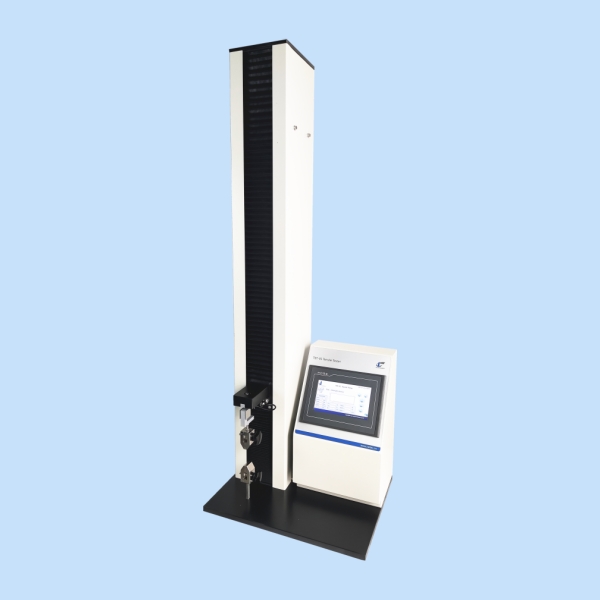
ASTM G143 specifies a web roller friction test method for measuring the static and kinetic coefficient of friction between a flexible web material and a cylindrical roller surface. The method simulates the frictional behavior that occurs during web handling, conveying, winding, printing, laminating, coating, and packaging processes where materials travel across driven or idler rollers.
Testing is performed by wrapping a strip specimen around a stationary cylindrical roller under a controlled tension and measuring the force required to initiate and maintain sliding. Using the measured forces and wrap angle, the coefficient of friction test provides valuable data for evaluating web transport performance, slip resistance, traction characteristics, and process stability.
ASTM G143 testing is widely applied to flexible materials such as plastic films, paper and paperboard, aluminum foils, nonwoven materials, textiles, elastomers, coated substrates, and specialty engineered webs. Industries including flexible packaging, paper converting, printing, medical packaging, pharmaceutical packaging, electronics, and industrial manufacturing rely on web/roller friction data to optimize production efficiency and product quality.
Web roller friction testing equipment designed for ASTM G143 typically enables controlled adjustment of web tension, sliding distance, sliding speed, and wrap angle, allowing users to simulate real production conditions and evaluate the interaction between materials and roller surfaces. These systems support product development, quality control, material comparison, coating evaluation, and process troubleshooting applications.
FAQ about ASTM G143
What is ASTM G143?
ASTM G143 is a standard test method for measuring the friction characteristics between a flexible web material and a roller surface. It determines both static and kinetic coefficients of friction under controlled conditions that simulate web transport systems.
What materials can be tested according to ASTM G143?
The method is suitable for a wide variety of flexible materials, including:
- Plastic films
- Paper and paperboard
- Aluminum foils
- Textiles and nonwovens
- Elastomeric sheets
- Laminated materials
- Coated web products
What is the difference between ASTM G143 and ASTM D1894?
ASTM G143 evaluates friction between a flexible web and a cylindrical roller, making it particularly relevant for web handling and conveying applications. ASTM D1894 measures friction between two flat surfaces and is commonly used for plastic films and sheeting. ASTM G143 generally provides a more realistic assessment of roller transport behavior.
Why is web/roller friction important?
Web/roller friction directly influences material handling performance. Excessively low friction may cause slippage, tracking issues, or roller damage, while excessively high friction can lead to steering problems, web deformation, increased motor loads, or processing inefficiencies.
What test results are obtained from ASTM G143 testing?
Typical results include:
- Static coefficient of friction (Static COF)
- Kinetic coefficient of friction (Dynamic COF)
- Breakaway friction force
- Sliding friction force
- Friction behavior under different tensions and sliding conditions
Which industries commonly use ASTM G143 testing?
ASTM G143 testing is widely used in:
- Flexible packaging
- Paper and paperboard converting
- Printing and coating operations
- Medical device packaging
- Pharmaceutical packaging
- Electronics materials manufacturing
- Textile and nonwoven production
- Research and testing laboratories
What equipment features are important for ASTM G143 testing?
- Precise force measurement capability
- Adjustable web tension control
- Configurable wrap angles
- Variable sliding speed settings
- Automated data acquisition
- Static and kinetic COF calculation functions
- Custom fixture options for specialized materials and applications
Can ASTM G143 testing be customized for specific production conditions?
 NN
NN  EN
EN  ES
ES  DE
DE  FR
FR  IT
IT  AR
AR  KO
KO  JA
JA  RU
RU  PT
PT  VI
VI  ID
ID  BG
BG  CS
CS  DA
DA  EL
EL  ET
ET  FI
FI  HE
HE  HU
HU  LT
LT  LV
LV  NL
NL  PL
PL  RO
RO  SK
SK  SV
SV  SL
SL  UK
UK  TR
TR  BE
BE  BS
BS  HI
HI  HR
HR  KK
KK  ML
ML  MY
MY  SR
SR  TA
TA  UZ
UZ  SQ
SQ  TH
TH