
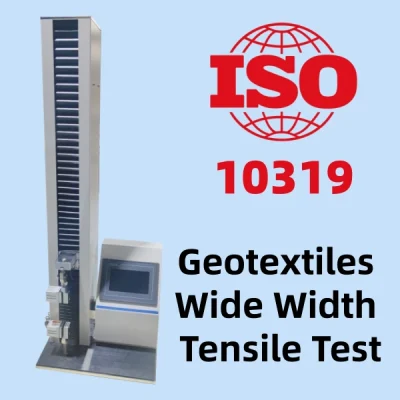
ال ISO 10319 يحدد معيار طريقة اختبار الشد العريض العرض لتحديد سلوك الشد للمنسوجات الأرضية وما يتصل بها من مواد التكسية الأرضية. وتلعب هذه الطريقة دورًا حاسمًا في تقييم أداء المواد في ظل ظروف التحميل في العالم الحقيقي، خاصةً في تطبيقات الهندسة المدنية والبنية التحتية والبيئة.
على عكس طرق الشريط الضيق, ISO 10319 يستخدم عينة عريضة, التأكد من أن خواص الشد المقاسة تعكس الأداء الميداني بشكل دقيق. ويشمل ذلك اختبار قوة الشد للتكسية الأرضية, اختبار استطالة التكسية الأرضية, وتقييم الصلابة.
نظرة عامة على نطاق اختبار الأيزو 10319 ISO 10319
ISO 10319 ينطبق على مجموعة واسعة من المواد التركيبية الأرضية:
- التكسية الأرضية المنسوجة وغير المنسوجة
- التكسية الأرضية المحبوكة
- مركبات جيوكومبوسايت
- الجيوغريدات الأرضية (مع تعديل أبعاد العينة)
- الجيومات والكيماويات الأرضية المعدنية
إنه باستثناء الحواجز البوليمرية أو البيتومينية, ولكنها تشمل الحواجز الجيولوجية الاصطناعية الطينية.
يركز المعيار على تحديد:
- قوة الشد القصوى لكل وحدة عرض
- الاستطالة عند القوة القصوى
- صلابة القاطع
- سلوك تمديد القوة-تمديد القوة
مبدأ اختبار الشد بالعرض الواسع
في اختبار الشد بالعرض العريض للتكسية الأرضية ISO 10319, تُثبَّت العينة بعرضها بالكامل وتُعرَّض لشدِّ سرعة رأس عرضية ثابتة حتى التمزق.
الخصائص التقنية الرئيسية:
- ال عرض العينة يتجاوز طول المقياس, تقليل تأثيرات الحواف إلى الحد الأدنى
- يتم تطبيق الحمل طوليًا حتى الفشل
- يُقاس الإجهاد باستخدام مقياس التمدد موضوعة عند نقاط قياس محددة
يضمن هذا التكوين:
محاكاة أكثر واقعية لظروف الإجهاد في الميدان مقارنةً باختبارات الشريط الضيق
إجراءات اختبار اختبار قوة الشد للمنسوجات الأرضية
تحضير العينة
- طول المقياس القياسي: 100 ± 3 مم
- العلامات المرجعية: 60 مم (± 30 مم من المركز)
- المحاذاة: يجب محاذاة العينة مع اتجاه الحمولة (MD/CMD)
إعداد الماكينة
- حدد نطاق القوة المناسب (الدقة في حدود 10 نيوتن)
- قدم طلبك ما قبل الشد (1%), ، باستثناء الأقمشة غير المنسوجة
- اضبط سرعة الرأس المتقاطع لتحقيقه:
- 20 ± 5% معدل الإجهاد في الدقيقةأو
- 30 ± 5 ثوانٍ للكسر (مواد منخفضة الاستطالة)
تنفيذ
- بدء الاختبار والتسجيل:
- قوة الشد القصوى
- الاستطالة عند الاستراحة
- تجاهل النتائج غير الصالحة:
- الفواصل داخل 5 مم من الفكين 5 مم
- انزلاق أو تلف العينة
قياس استطالة التكسية الأرضية اختبار الاستطالة
ال اختبار استطالة التكسية الأرضية يحدد مقدار تمدد المادة تحت الحمل.
- يقاس باستخدام تتبع أجهزة قياس التمدد النقاط المرجعية
- معبراً عنها ب النسبة المئوية للسلالة (%)
- تشمل:
- الإجهاد عند القوة القصوى
- منحنى الاستطالة بالقوة الكاملة
مهم: يتطلب قياس الإجهاد الدقيق ما يلي لا يوجد انزلاق ولا تلف في العينة.
المعلمات الرئيسية في المواصفة القياسية ISO 10319
| المعلمة | الوصف |
|---|---|
| قوة الشد | القوة القصوى لكل وحدة عرض |
| الاستطالة | التمديد عند الاستراحة (%) |
| صلابة القاطع | مقاومة التشوه |
| معدل الإجهاد | يتم التحكم فيها عبر سرعة الرأس المتقاطع |
| طول المقياس | الطول المرجعي الأولي |
تشكل هذه المعلمات أساسًا ل التصميم الهندسي ومراقبة الجودة.
المتطلبات والتوصيات المتعلقة بالمعدات
يعد جهاز اختبار الشد عالي الجودة ضروريًا للامتثال لما يلي ISO 10319.
الحل الموصى به: Cell Instruments اختبار الشد Cell Instruments
ال جهاز اختبار الشد TST-01 من Cell Instruments توفر منصة قوية ودقيقة من أجل اختبار قوة الشد للتكسية الأرضية و اختبار استطالة التكسية الأرضية.
المزايا الرئيسية:
- نظام التحكم المنطقي القابل للبرمجة القابلة للبرمجة (PLC) مع واجهة إدارة التحكم الآلي (HMI) لتشغيل مستقر وبديهي
- محرك لولبي كروي دقيق تضمن سرعة وإزاحة ثابتة
- نطاق سرعة واسع (1-500 مم/دقيقة) لتلبية متطلبات معدل الإجهاد ISO
- دقة عالية (0.5% FS) للحصول على نتائج موثوقة
- التركيبات المرنة للمواد الجيوسنثية المختلفة
- خياري إخراج البيانات وتكامل البرامج للإبلاغ
يدعم هذا النظام اختبار قابل للتكرار ومتوافق مع المعايير, مما يجعلها مناسبة للمختبرات والمصنعين ووكالات التفتيش.
لماذا تعتبر المواصفة القياسية ISO 10319 مهمة لضمان الجودة
التنفيذ ISO 10319 يضمن:
- الاتساق في الاختبار عبر المختبرات
- مقارنة موثوقة لأداء المواد
- تنبؤ أفضل للسلوك الميداني
- الامتثال للمواصفات الهندسية الدولية
بالنسبة للمصنعين وفرق مراقبة الجودة، فإن اعتماد هذا المعيار يعزز المصداقية وقبول المنتج في الأسواق العالمية.
الاعتبارات العملية للاختبار الدقيق
لضمان صحة النتائج:
- الاستخدام مقابض مناسبة (مقابض كابستان للمواد عالية القوة)
- تجنب الضرر الناجم عن الفك
- الاختبار عينات رطبة في غضون 3 دقائق بعد الإزالة
- تسجيل جميع التعديلات في تقرير الاختبار
يؤدي الاهتمام بهذه التفاصيل إلى تحسين قابلية التكرار وسلامة البيانات بشكل كبير.
 AR
AR  EN
EN  ES
ES  DE
DE  FR
FR  IT
IT  KO
KO  JA
JA  RU
RU  PT
PT  VI
VI  ID
ID  BG
BG  CS
CS  DA
DA  EL
EL  ET
ET  FI
FI  HE
HE  HU
HU  LT
LT  LV
LV  NL
NL  PL
PL  RO
RO  SK
SK  SV
SV  SL
SL  UK
UK  TR
TR  BE
BE  BS
BS  HI
HI  HR
HR  KK
KK  ML
ML  MY
MY  NN
NN  SR
SR  TA
TA  UZ
UZ  SQ
SQ  TH
TH